

Introduction to Kamakhya Temple
The Kamakhya Temple, located in Assam, India, is one of the most significant Shakti Peethas in Hinduism. This revered temple is dedicated to the goddess Kamakhya, who represents the divine feminine energy or Shakti. The temple is situated atop the Nilachal Hill in Guwahati, which not only provides a panoramic view of the surrounding landscape but also adds to its spiritual allure. The Kamakhya Temple is renowned for its unique rituals and the annual Ambubachi Mela, which attracts thousands of pilgrims and tourists, highlighting its importance in the cultural and religious practices of the region.
Kamakhya Temple is one of the most sacred Hindu temples dedicated to Goddess Kamakhya, a powerful form of Goddess Shakti. Located on the Nilachal Hill in Guwahati, this temple is an important center of Tantric worship and a major pilgrimage site in India. According to mythology, it marks the spot where the yoni (womb) of Goddess Sati fell during the Daksha Yajna. Devotees visit the temple to seek blessings for fertility, prosperity, and spiritual power. The temple is also famous for the annual Ambubachi Mela celebration.
With its ancient history and rich spiritual heritage, the Kamakhya Temple has become a prominent pilgrimage destination for devotees from all over the world. The temple is not merely a place of worship; it symbolizes the empowerment of women and honors the goddess’s association with fertility, love, and sensuality. The site is believed to be the spot where the yoni (female reproductive organ) of Sati, the wife of Lord Shiva, fell when her body was dismembered by her father Daksha, following an insult to her husband. This connection to the divine narrative adds layers of significance to the temple, reinforcing its status as a sacred site.
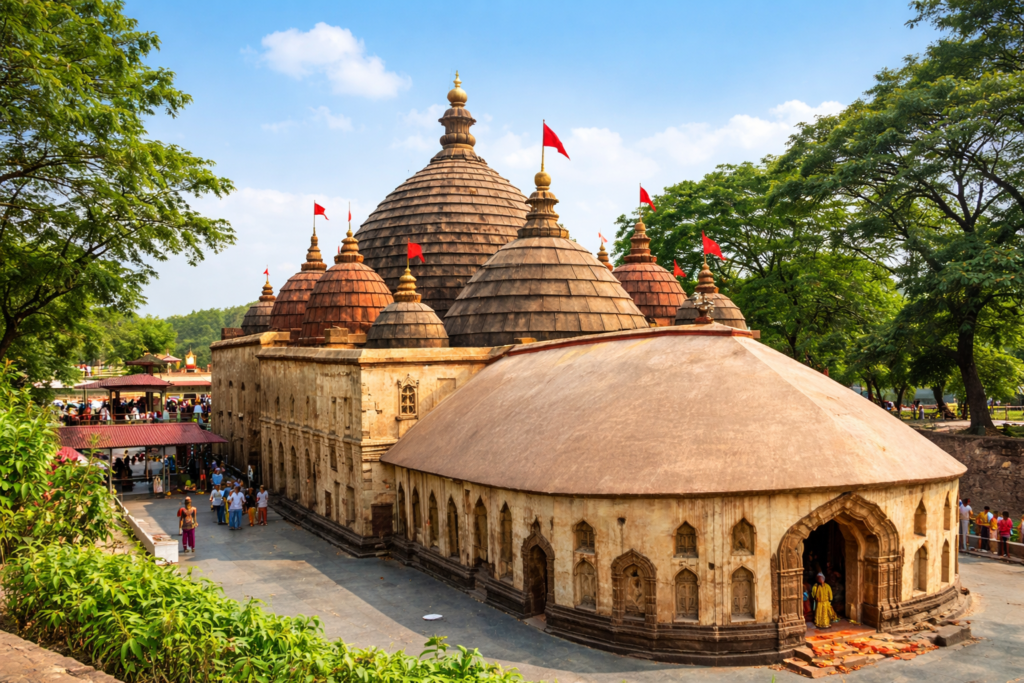
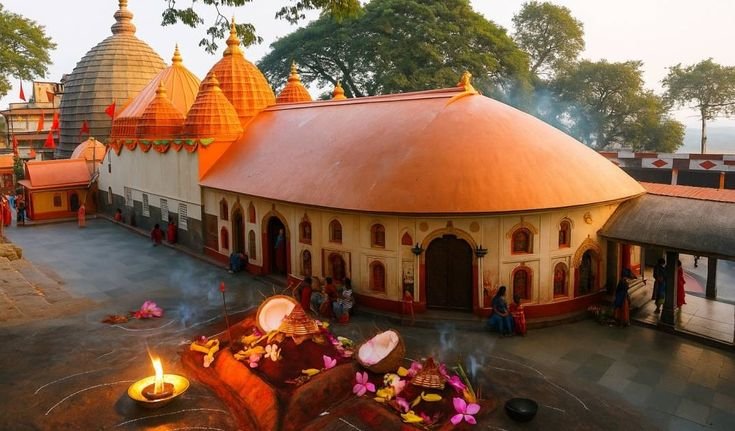
Moreover, the architecture of the Kamakhya Temple exemplifies the Nagara style, characterized by its beehive-shaped Shikhara, which is adorned with ornate carvings and sculptures. This striking design features intricate motifs that narrate stories from Hindu mythology. The temple complex consists of multiple shrines, each dedicated to various deities, further enhancing its spiritual ambiance.
In essence, the Kamakhya Temple stands as a testament to the profound spirituality embedded in the region, serving as an essential focal point for the worship and reverence of Shakti. Its significance extends beyond religious practices, making it a vital part of the cultural identity of Assamese people and the broader spectrum of Hinduism.
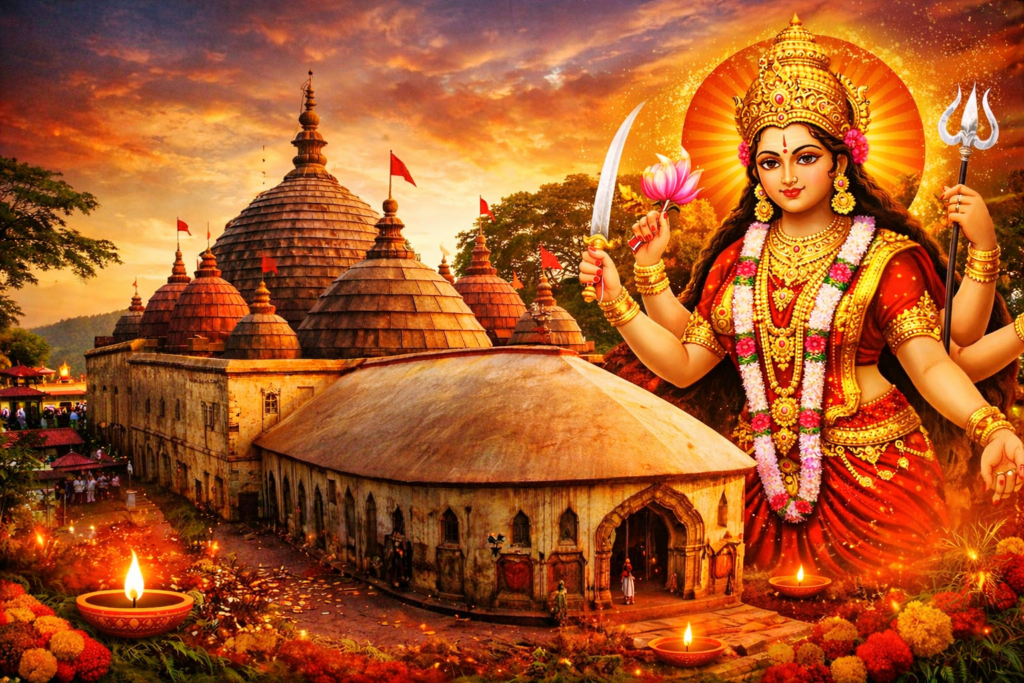
Devotees from Bangalore can easily plan a spiritual journey to Kamakhya Temple with well-organized pilgrimage packages offered by Seven Sands Tourism. The company provides complete Kamakhya Temple tour packages from Bangalore, including flight assistance, comfortable hotel accommodation, airport transfers, and guided temple darshan.
Travelers can reach Guwahati smoothly and enjoy a peaceful visit to one of India’s most sacred Shakti Peeths. With carefully planned itineraries and reliable support, Seven Sands Tourism ensures a hassle-free and memorable pilgrimage experience. Whether traveling with family or in a group, devotees can explore Kamakhya Temple comfortably while focusing on spiritual blessings and divine darshan.
Kamakhya Temple History
The Kamakhya Temple is one of the most sacred Shakti Peethas dedicated to Kamakhya Devi. Located on Nilachal Hill, the temple is believed to be the place where the womb of Sati fell during the mythological events connected to Shiva. The temple is famous for its unique rituals, tantric traditions, and the annual Ambubachi Mela, which celebrates the divine feminine power.
The Kamakhya temple history , located in Assam, India, is one of the most venerated shrines dedicated to Shakti, representing feminine power in Hinduism. Its origins are steeped in legend and mythology, tracing back to ancient times. Historically, the temple is believed to have been constructed during the 8th century CE by the king of the Kamarupa Kingdom, but references to the temple can be found in ancient texts that precede this era. As the cradle of Tantric worship, the temple has nurtured and upheld distinct rituals and practices central to the Shakta tradition.
Throughout its history, the Kamakhya temple history underwent significant transformations, particularly during the rule of the Nara Narayana kings in the 16th century. These rulers played a crucial role in reconstructing and enhancing the temple complex, further establishing its prominence in the region. Under their patronage, numerous intricate sculptures and architectural features were added, which reflected the rich socio-political tapestry of the time. This era also saw the temple’s integration into the broader cultural life of Assam, solidifying its status as a pilgrimage site for devotees.
The Kamakhya temple history is one of the most sacred Shakti Peethas in India, located on the Nilachal Hill. The temple is dedicated to Goddess Kamakhya, a powerful form of Shakti. According to Hindu mythology, it marks the place where the yoni (womb) of Sati fell during the cosmic dance of Shiva. The present structure was rebuilt in the 16th century by Nara Narayana of the Koch dynasty. The temple is famous for its Tantric traditions and the annual Ambubachi Mela.
Additionally, the influence of Tantric worship traditions cannot be understated in the evolution of Kamakhya temple history. The temple is revered not only as a religious site but also as a center for learning and practice of Tantra. The rituals performed here have attracted scholars and practitioners from various parts of India, enriching the temple’s spiritual ambiance. The annual Ambubachi Mela festival draws thousands of pilgrims, further highlighting the temple’s enduring significance in Hindu culture and the broader landscape of Indian spirituality.
The Story of Kamakhya Devi
The narrative surrounding Maa kamakhya Devi story is a captivating blend of mythology and spiritual significance, deeply rooted in Hindu tradition. At the core of this story lies the goddess Sati, an embodiment of divine energy and one of the consorts of Lord Shiva. Sati’s tragic fate is integral to the legend of the Kamakhya Temple, which is recognized as one of the most important Shakti Peethas in India.
The story of Kamakhya Devi is deeply connected to the sacred power of the Divine Mother in Hindu tradition. According to mythology, when Sati sacrificed herself during the conflict with her father Daksha, Lord Shiva carried her body across the universe in grief. During this time, her sacred womb (yoni) fell at the Kamakhya Temple, making it one of the most powerful Shakti Peethas. Devotees believe the goddess symbolizes fertility, feminine power, and creation, attracting pilgrims from across India.
The Story of Kamakhya Devi According to Hindu mythology, Sati was the daughter of King Daksha. Despite her father’s disapproval, she married Shiva, a union that caused great unrest within the celestial hierarchy. Daksha organized a grand Yagna (sacred sacrifice) and deliberately excluded Shiva from the guest list, intending to insult him. Sati, motivated by love and desire to accompany her husband, attended the Yagna, which ultimately led to grave consequences. Upon witnessing her husband’s mockery, Sati was consumed by despair and self-immolated in the sacrificial fire, choosing to embrace death over living without her beloved.
In Story of Kamakhya Devi Shiva, heartbroken by Sati’s death, wandered the universe in sorrow, carrying her charred body, causing cosmic chaos. In a bid to restore balance, the gods intervened, and Vishnu sliced Sati’s body into fifty-one pieces, scattering them across the Indian subcontinent. This act established various Shakti Peethas, each marking a spot where Sati’s body parts had fallen. The Kamakhya Temple in Assam is believed to be built on the site where her yoni, symbolizing divine feminine energy, fell.
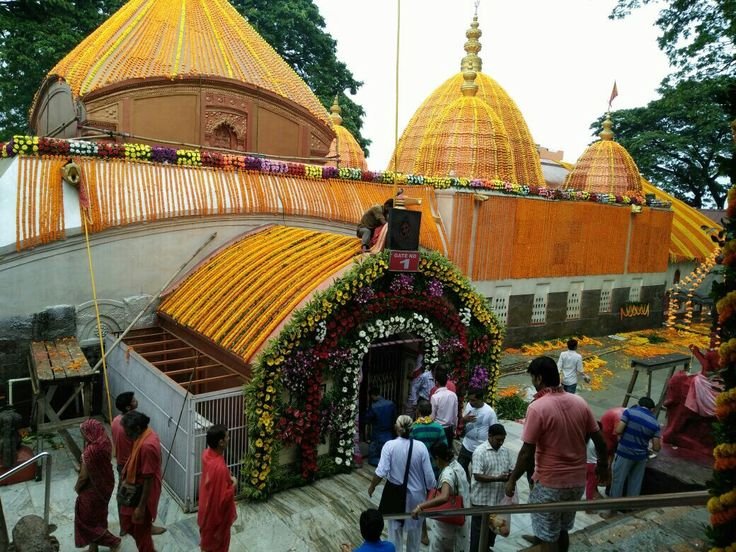
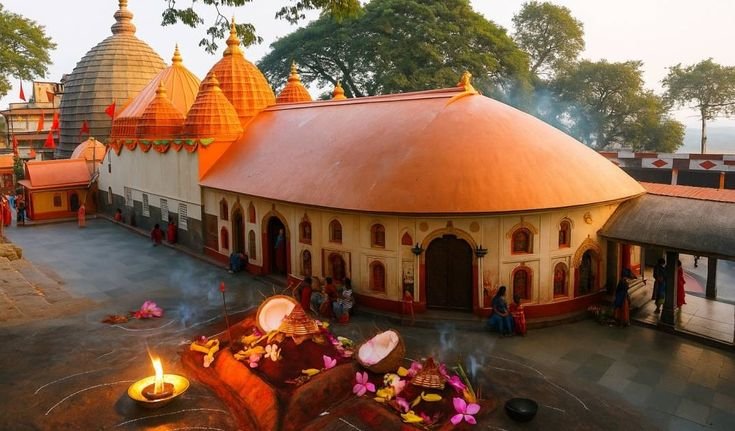
The significance of Story of Kamakhya Devi extends beyond her tragic narrative; she represents the power of creation and destruction, embodying the cyclical nature of life. The temple now stands as a revered site of worship, celebrating the goddess’s essence and attracting devotees who seek her blessings for fertility and empowerment.
Why Kamakhya Temple is Unique
Kamakhya Temple is unique because it is one of the most important Shakti Peethas in India, dedicated to Goddess Kamakhya, representing feminine power and fertility. Unlike most temples, there is no idol; instead, devotees worship a natural rock formation symbolizing the goddess. The temple is also famous for the annual Ambubachi Mela, which celebrates the divine feminine cycle. Its Tantric traditions, ancient history, and spiritual significance make it one of the most mysterious and sacred temples in India.
The Kamakhya Temple, located on the Nilachal Hill in Assam, India, is a remarkable site renowned for its distinctive approach to worship and spirituality. Unlike traditional Hindu temples, the Kamakhya Temple does not feature an idol of the goddess in a conventional sense. Instead, it is built around a natural stone yoni, which symbolizes the divine feminine energy. This unique representation diverges from typical idol worship, making it a subject of profound interest among scholars and devotees alike.
At Kamakhya, the yoni is revered as a manifestation of the goddess Kamakhya, who is synonymous with fertility and creation. This representation transcends the constraints of physical forms, emphasizing the concept of Shakti, the vital force that drives all existence. The absence of a conventional idol indicates the temple’s deep-rooted connection to the earth, femininity, and the life-giving aspects of nature, further solidifying its unique standing in the realm of spiritual practice.
The temple’s practices also reflect the principles of Tantra, which emphasizes direct experiences of spirituality rather than adhering strictly to rituals. Followers engage in worship that celebrates feminine energy and fertility, showcasing the temple’s role as a significant pilgrimage site for those seeking spiritual empowerment and renewal. Additionally, the temple is believed to host the annual Ambubachi Mela, which draws thousands of devotees and tourists alike, symbolizing the goddess’s annual menstruation cycle, representing regeneration and the sacred cycle of life.
In summary, Kamakhya Temple’s uniqueness lies in its absence of traditional idol worship, the representation of the goddess through natural elements, and the emphasis on feminist energy and Tantric practices. Through these aspects, it serves as a vibrant center for those who wish to explore the complexities of divinity and the spirituality surrounding feminine principles.
Architecture of Kamakhya Devi Temple
The Kamakhya Devi Temple, situated atop the Nilachal Hill in Assam, India, exhibits a unique architectural style that captivates both worshippers and visitors alike. The temple is renowned for its striking beehive-shaped structure, locally known as “Nande Aikhya” or “Nato,” which is a significant characteristic that distinguishes it from other Hindu temples. This architectural element not only serves aesthetic purposes but also symbolizes the fertility goddess Kamakhya herself, aligning with the temple’s dedication to Shakti, the feminine divine energy.
The temple’s construction reflects a remarkable blend of Hindu architectural traditions and local craftsmanship, which reveals the region’s cultural influences over the centuries. The outer walls of the temple feature intricate carvings and sculptures that depict various deities, mythical creatures, and symbols associated with the religion. Such embellishments showcase the artistic expertise of the artisans and emphasize the spiritual narrative central to the temple’s significance.
Inside the temple complex, visitors will find several smaller shrines dedicated to various manifestations of Devi and nearby sacred spaces that contribute to the overall spirituality of the site. The temple complex is designed not just for worship but as a sanctum facilitating introspection and connection with the divine. Visitors often describe the ambiance within the temple as profoundly spiritual, fostering a sense of reverence and participation in centuries-old rituals.
The underlying architectural style echoes the influences of the Kamrup region’s rich history, where the confluence of various ethnic and cultural groups has shaped the local architecture. The Kamakhya Temple stands not merely as a place of worship but as an enduring symbol of the convergence of diverse traditions, embodying the continuity of the sacred in everyday life.
Ambubachi Mela at Kamakhya Temple
The Ambubachi Mela is a sacred Hindu festival held every year at the Kamakhya Temple. It celebrates the divine feminine power and is believed to mark the annual menstruation of Goddess Kamakhya Devi. During the three-day period, the temple remains closed, symbolizing the goddess’s rest. On the fourth day, it reopens for devotees, and thousands of pilgrims, saints, and Tantric practitioners gather to seek blessings, making it one of the most unique spiritual festivals in India.
The Ambubachi Mela is one of the most significant festivals celebrated at the Kamakhya Temple, marking a time of deep spiritual importance and devotion. Held annually during the monsoon season, this festival attracts thousands of devotees from across India and beyond. The Ambubachi Mela coincides with the Assamese month of Ahaar, usually around June, and it symbolizes the goddess Kamakhya’s menstruation, a natural process that embodies fertility and creation.
During the Ambubachi Mela, the temple complex becomes vibrant with festivities, where devotees engage in elaborate rituals and offerings. The main attractions during the festival include the worship of the goddess, performance of traditional rites, and the ceremonial closure of the temple for three days, believed to be a period of the goddess’s renewal. On the fourth day, the temple reopens, signifying the end of this sacred menstruation period and the restoration of the goddess’s divine energy.
Devotees participate in various activities such as chanting, meditation, and performing specific rituals intended to seek blessings from the goddess. The atmosphere is charged with spiritual reverence, as devotees believe that participating in the Ambubachi Mela can cleanse them of sins and grant them spiritual fulfillment. Vendors also set up stalls around the temple, selling religious artifacts, traditional sweets, and handicrafts, further contributing to the lively ambiance of the Mela.
The cultural and spiritual significance of the Ambubachi Mela extends beyond the rituals themselves. It fosters a sense of community and shared belief among attendees, reinforcing the cultural identity tied to the sacredness of the Kamakhya Temple. This festival not only attracts pilgrims but also provides an opportunity for cultural exchange, showcasing various art forms and traditions inherent to the region. Overall, the Ambubachi Mela encapsulates the rich spiritual heritage of the Kamakhya Temple and continues to play a vital role in the religious landscape of Assam.
Best Time to Visit Kamakhya Temple
The Kamakhya Temple, located in Guwahati, Assam, is a revered spiritual site, attracting pilgrims and tourists year-round. However, choosing the ideal time for your visit can significantly enhance your experience. Generally, the months from March to June and September to November are considered the best periods to embark on a pilgrimage to this sacred temple.
The best time to visit Kamakhya Temple is between October and March, when the weather in Guwahati is pleasant and comfortable for temple darshan and sightseeing. Many devotees also visit during the famous Ambubachi Mela in June, which celebrates the divine feminine power of Goddess Kamakhya. However, winter months are considered the most peaceful and ideal for a spiritual visit.
From March to June, the weather in Guwahati is relatively pleasant, with temperatures ranging from 20°C to 35°C. This period is particularly favorable for visitors, as it allows for more comfortable exploration of the temple complex and its surroundings. Additionally, during the latter part of this timeframe, the famous Ambubachi Mela, a vibrant festival celebrating the annual menstruation of the goddess, takes place in June. This festival draws thousands of devotees and provides a unique opportunity to witness traditional rituals.

Following the monsoon months, from September to November, visitors can experience clear skies and cooler temperatures, making it an ideal time for pilgrimage. The temple timings during these months are generally from 5:30 AM to 10:00 PM. However, it is recommended to check for any seasonal variations or special events that could affect the hours of darshan. The temple practices strict observance of rituals, especially during major Hindu festivals, thus impacting accessibility.
For those seeking a quieter experience, weekdays outside of major festive events are preferable. Planning your visit around these considerations will enhance the spiritual significance of your journey to the Kamakhya Temple, allowing for both personal reflection and engagement in the temple’s vibrant spiritual atmosphere.
Visitor Experience at Kamakhya Temple
The visitor experience at Kamakhya Temple is a unique blend of spirituality, history, and devotion. Located on Nilachal Hill, the temple attracts thousands of devotees seeking blessings of Goddess Kamakhya. Visitors witness ancient rituals, sacred architecture, and powerful Shakti worship traditions. The atmosphere becomes especially vibrant during the Ambubachi Mela, when pilgrims from across India gather to celebrate the divine feminine energy. Overall, the temple offers a deeply spiritual and culturally rich pilgrimage experience.
The Kamakhya Temple, nestled in the Nilachal Hills of Guwahati, Assam, offers a deeply spiritual experience for visitors and pilgrims alike. As one of the Shakti Peethas, it attracts thousands of devotees throughout the year, particularly during the Ambubachi Mela, which celebrates the annual menstrual cycle of the goddess. For first-time visitors, it is advisable to arrive early in the day to avoid the rush. The temple’s architecture, adorned with intricate carvings and vibrant sculptures, provides a feast for the eyes, while the serene ambiance fosters a contemplative state of mind.
As you approach the temple, be mindful of the rituals being performed. Pilgrims often engage in prayers and offerings before the goddess, leading to a profound spiritual experience. It is customary to adhere to the local dress code, so dressing modestly is recommended. You can procure flowers, fruits, and other offerings from the vendors near the temple, which not only supports local artisans but also enhances your devotional experience.
Beyond the temple itself, the surrounding area offers a rich cultural tableau. Exploring the nearby attractions, such as the Umananda Island and the Assam State Museum, can provide additional insights into the spiritual heritage of the region. These sites often reflect the interconnectedness of Assamese culture and spirituality. Visiting the local markets can also enrich your experience, offering authentic Assamese cuisine that reflects the region’s diverse culinary traditions.
To further enhance your visit, consider immersing yourself in the local customs and engaging with the temple priests, who can provide guidance and context about the rituals taking place. Understanding the spiritual significance of the rituals can deepen your connection not just with the deity, but with the rich history embedded in the temple’s practices and architecture.
Conclusion : Kamakhya Temple: 7 Amazing Story and History of Maa Kamakhya
In conclusion, the Kamakhya Temple stands as a remarkable testament to the rich historical, cultural, and spiritual tapestry of India. This revered site, located in Assam, showcases the intricate relationship between religion and local traditions, acting as a pivotal center for Shakta worship. The temple’s unique architecture and the annual Ambubachi Mela not only attract pilgrims and visitors from across the country but also serve as a focal point for understanding the continuity of worship practices over centuries.
The temple’s historical significance is further underlined by its connection to various dynasties and rulers that have contributed to its maintenance and prominence. Its legends, rituals, and festivals paint a complex picture of the beliefs held by devotees, illustrating the temple’s role as a nurturing ground for spiritual exploration. The Kamakhya Temple embodies the essence of faith and serves as an enduring symbol of the divine feminine within Hinduism.
Additionally, the spiritual significance of the Kamakhya Temple extends beyond its physical structure. It resonates deeply with devotees, encouraging them to engage in rituals that connect them to the divine. The practices observed at this sacred site foster a sense of community, enabling individuals to partake in a shared devotion that transcends personal beliefs. The temple ultimately invites reflection on the impact of such sacred spaces in shaping cultural identity and collective memory within Indian society.
As we explore the multifaceted dimensions of the Kamakhya Temple, it becomes evident that it is more than just an architectural marvel; it is a living testament to the enduring nature of faith and spirituality. The temple’s rich legacy continues to influence countless lives, encouraging both worship and inquiry into the profound mysteries of existence.
Table of Contents
Places to Visit Near Kamakhya Temple
Kamakhya Temple is one of the most sacred Shakti Peethas in India, and many beautiful attractions are located nearby in Guwahati. Popular places to visit near the temple include Umananda Temple, the peaceful island shrine of Lord Shiva; Navagraha Temple dedicated to the nine planets; the scenic Brahmaputra River known for sunset cruises; and Assam State Zoo cum Botanical Garden, the largest zoo in Northeast India. These attractions make Guwahati a perfect mix of spirituality, nature, and sightseeing.
Umananda Temple
Umananda Temple is a famous Shiva temple located on Peacock Island in the middle of the Brahmaputra River in Guwahati. Built by Ahom King Gadadhar Singha in the 17th century, it is considered one of the smallest inhabited river islands in the world. Devotees visit this peaceful temple to worship Lord Shiva and enjoy scenic river views. A short ferry ride from the Guwahati riverbank makes the journey to this temple a unique spiritual and travel experience.
Assam State Zoo
Assam State Zoo cum Botanical Garden
Assam State Zoo is the largest zoo in Northeast India and a popular attraction in Guwahati. Spread across a large green area, the zoo houses many animals such as the one-horned rhinoceros, Royal Bengal tiger, leopard, and various bird species. Visitors can also explore the botanical garden inside the complex. It is a great place for families and nature lovers who want to experience Assam’s wildlife near Kamakhya Temple.
Brahmaputra River
The Brahmaputra River is one of the largest and most powerful rivers in Asia and flows through the city of Guwahati near Kamakhya Temple. Visitors often enjoy sunset cruises, boat rides, and scenic views along the riverbanks. The river also holds great cultural and spiritual importance in Assam. Watching the sunset over the Brahmaputra is considered one of the most beautiful experiences in Guwahati.
Navagraha Temple
Navagraha Temple is an ancient temple dedicated to the nine celestial planets in Hindu astrology. Located on Chitrachal Hill in Guwahati, the temple features nine Shiva lingams representing the Navagrahas. It is an important pilgrimage site where devotees perform rituals to reduce planetary doshas and seek blessings. The hilltop location also offers beautiful views of the Brahmaputra River and the city.
Kamakhya Temple By flight
Book Kamakhya Temple tour package from Bangalore By flight The nearest airport is Lokpriya Gopinath Bordoloi International Airport, located around 20 km from Kamakhya Temple. Taxis and app-based cabs are easily available from the airport to Nilachal Hill.
Maa Kamakhya Temple By Train
The nearest railway station is Kamakhya Railway Station, just 6 km from the temple. Another major station is Guwahati Railway Station, about 8 km away, with trains from cities like Delhi, Kolkata, and Mumbai.
Maa Kamakhya Temple By Road
Guwahati has strong road connectivity through National Highways. Buses, taxis, and private vehicles easily reach the temple area from nearby cities and towns in Assam and Northeast India.
Frequently Asked Questions (FAQs)
Where is Kamakhya Temple located?
Kamakhya Temple is located on Nilachal Hill in Guwahati, Assam, overlooking the Brahmaputra River.
What is the nearest airport to Kamakhya Temple?
The nearest airport is Lokpriya Gopinath Bordoloi International Airport, approximately 20 km from the temple.
Which railway station is closest to the temple?
The closest railway station is Kamakhya Railway Station, located about 6 km away.
How far is Kamakhya Temple from Guwahati city?
The temple is about 7–8 km from central Guwahati.
Can we reach Kamakhya Temple by taxi or cab?
Yes, taxis, auto-rickshaws, and app-based cabs are easily available from Guwahati city, the airport, and railway stations.
Is there a direct bus to Kamakhya Temple?
Local buses operate up to the base of Nilachal Hill. From there, shared taxis and autos take visitors to the temple entrance.
What is the best time to visit Kamakhya Temple?
The best time to visit is October to March when the weather in Guwahati is pleasant.
How long does darshan usually take?
Darshan can take 30 minutes to 2 hours, depending on the crowd and festival season.