If you are a traveler from Bangalore seeking to touch the sky or simply gaze upon the legendary giants of the Himalayas, understanding India’s complex geography is the first step of your journey. The debate over the “highest peak” often leads to confusion, but for the visitor, it offers a fascinating window into India’s rich cultural and mountaineering history.
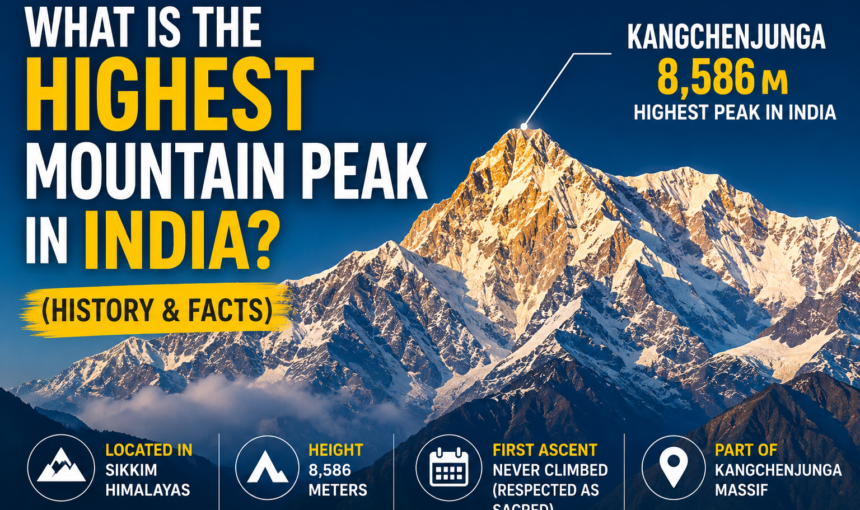
The Answer: Officially, Kangchenjunga is the highest mountain peak in India, standing at an elevation of 8,586 meters (28,169 ft). It is the third-highest mountain in the world and serves as a majestic border guardian between the Indian state of Sikkim and Nepal.
Why Is There Confusion Regarding the “Highest Peak” in India?
Travelers often find themselves debating between three different mountains when discussing India’s highest point: K2, Kangchenjunga, and Nanda Devi. Understanding the “why” behind this confusion reveals the unique political and geographical landscape of the Indian subcontinent.
The K2 Dilemma: Is it the Highest?
Technically, K2 (Mount Godwin-Austen) is the second-highest mountain in the world at 8,611 meters (28,251 ft). Located in the Karakoram range, K2 sits within the region of Gilgit-Baltistan. While it falls within the territory defined by the Indian government as part of the union territory of Jammu & Kashmir, the region is currently under Pakistan’s administration. Therefore, while it is physically higher than Kangchenjunga, it is not accessible for standard Indian tourism expeditions and remains a subject of international geopolitical dispute.
Nanda Devi: The Highest Entirely Within India
If you are looking for the highest peak located entirely within the Indian mainland, the title belongs to Nanda Devi (7,816 m) in Uttarakhand. Unlike Kangchenjunga, which is shared with Nepal, Nanda Devi stands fully within Indian borders, serving as a patron goddess for the Garhwal and Kumaon Himalayas.
Geographical Comparison: At a Glance
| Mountain Peak | Height (m) | Location | Status |
| K2 | 8,611 | Karakoram | Highest in Indian-claimed territory |
| Kangchenjunga | 8,586 | Sikkim/Nepal | Official Highest Peak in India |
| Nanda Devi | 7,816 | Uttarakhand | Highest entirely within the Indian mainland |
The Sacred Legacy of Kangchenjunga
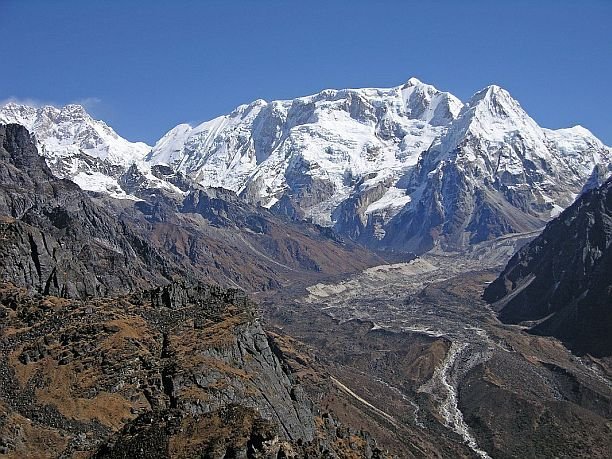
For the people of Sikkim, Kangchenjunga is far more than a “peak.” Its name, derived from the Tibetan words Kang-Chhen-Dzo-Nga, translates to “The Five Treasures of Snow”. These treasures—gold, silver, gems, grain, and holy books—are said to be hidden within the five peaks of the massif.
A Spiritual Pact
The mountain holds immense religious significance, particularly for the Lepcha people, who consider themselves “Children of the Snowy Peaks,” born from the very snows of this mountain. Out of deep respect, the Chogyal (former monarchs of Sikkim) made a pact that the summit would remain inviolate. To this day, many expeditions stop just a few meters short of the actual summit to honor the local belief that spirits reside at the top.
Expedition Realities: Is It Possible to Climb?
Climbing Kangchenjunga is considered one of the most technical and dangerous undertakings in mountaineering. Unlike the “tourist-friendly” commercial routes on Everest, Kangchenjunga is remote, prone to sudden avalanches, and demands an elite level of fitness and experience. Most who attempt it have already summited multiple 6,000m and 8,000m peaks.
For the average traveler, the “climb” is replaced by the “journey”—the trek to base camps or high-altitude viewpoints where the scale of the massif can be truly appreciated.
Planning Your Himalayan Journey from Bangalore
For families and couples traveling from Bangalore, the journey to the Himalayas is a rewarding transition from the tropical plateaus of the Deccan to the crisp, high-altitude air of the Northeast.

Travel Logistics
- The Bangalore-Sikkim Connection: The most efficient route is a flight from Bengaluru (BLR) to Bagdogra Airport (IXB). Flights typically take 2.5 to 3 hours.
- The Final Stretch: From Bagdogra, you will head into the mountains. Gangtok is a 4–5 hour drive, while Pelling—offering the best direct views of Kangchenjunga—is about 6–7 hours away.
- Permits & Prep: Because parts of Sikkim are near international borders, you will need to arrange Inner Line Permits (ILP). Working with a specialized agency ensures these are processed before you land.
Best Time to Visit
- Spring (March–May): Experience the rhododendron blooms and clear morning skies perfect for mountain photography.
- Autumn/Winter (October–February): Offers the crispest air and the highest probability of seeing the peaks without cloud cover.
Experience the Majesty with Seven Sands Tourism
While the summit of Kangchenjunga remains the domain of expert mountaineers, the beauty of the Himalayan foothills is accessible to those who seek premium comfort and seamless logistics.
Seven Sands Tourism is your bridge between the urban life of Bangalore and the serene heights of the Himalayas. We don’t just book hotels; we curate experiences that respect the sanctity and beauty of these landscapes.
Why Choose Seven Sands Tourism?
- Tailored Itineraries: Whether you are a couple seeking a romantic retreat in Pelling or a family looking for cultural immersion in Gangtok, we design the trip to your pace.
- Premium Logistics: We eliminate the stress of mountain travel by providing private, reliable transfers and local experts who know the hidden viewpoints that remain off the standard tourist radar.
- Hassle-Free Planning: From securing your permits to ensuring your accommodation is climate-ready, we manage the complexities so you can focus on the view.
Ready to stand in the shadow of the Five Treasures of Snow?
The Himalayas are calling, and your perfect getaway is just a conversation away. Let Seven Sands Tourism craft your next adventure.
[Contact us today to book your bespoke Sikkim holiday package]—because you deserve a travel experience as grand as the mountains themselves.
The Top 3 Highest Mountain Peak in India: A Journey to the Clouds
The three highest mountain peaks in India— K2, Kangchenjunga, Nanda Devi, and Kamet—stand as monumental icons of the Himalayan landscape. K2 Standing at 8,611 meters (28,251 ft), K2 is the second-highest mountain in the world. Kangchenjunga (8,586 meters), situated on the Sikkim-Nepal border, is the official highest peak in India and the third-highest globally, famously revered as the “Five Treasures of the Great Snow”.
Nanda Devi (7,816 meters) in Uttarakhand holds the distinction of being the highest peak located entirely within the Indian mainland, serving as a pristine UNESCO World Heritage sanctuary and a spiritual symbol for the Garhwal Himalayas. Ranking third is Kamet (7,756 meters), also located in Uttarakhand’s Garhwal region, known for its dramatic pyramid-like summit and challenging high-altitude terrain.

Whether you are an adventure enthusiast or a traveler seeking to witness these majestic giants firsthand, Seven Sands Tourism specializes in curating seamless, premium travel experiences, handling every logistical detail to ensure your journey into the heart of the Himalayas is both comfortable and unforgettable.
K2: The Savage Mountain and the Geopolitical Puzzle
Standing at 8,611 meters (28,251 ft), K2 is the second-highest mountain in the world, surpassed only by Mount Everest. Located in the Karakoram Range, it is a peak defined as much by its deadly climbing conditions as by the complex territorial disputes surrounding its location.
A Geographic and Climatic Titan
Often mistaken for a Himalayan peak, K2 is actually part of the Karakoram system, a separate mountain range distinguished by its extreme ruggedness, high glacier density, and unpredictable weather. It sits on the border between the Gilgit-Baltistan region (administered by Pakistan) and the Xinjiang region (administered by China).
K2 is famously known as “The Savage Mountain”. This reputation is well-earned: it is statistically one of the world’s deadliest peaks, with a fatality rate significantly higher than that of Everest. Its climbing routes, such as the famous Abruzzi Spur, are steep, technical, and prone to sudden, violent storms and avalanches, making it a challenge reserved only for the world’s most elite mountaineers.
The Question of “Indian-Claimed Territory”
The classification of K2 as the “highest in Indian-claimed territory” stems from the ongoing geopolitical dispute over the Kashmir region.
Following the partition of the Indian subcontinent in 1947, the former princely state of Jammu and Kashmir became a point of contention between India and Pakistan. India maintains that the entire region of the former princely state—including Gilgit-Baltistan, where K2 is located—is legally a part of India. Consequently, in official Indian records and maps, K2 is often cited as being within Indian-administered territory, even though it is physically under the administrative control of Pakistan.
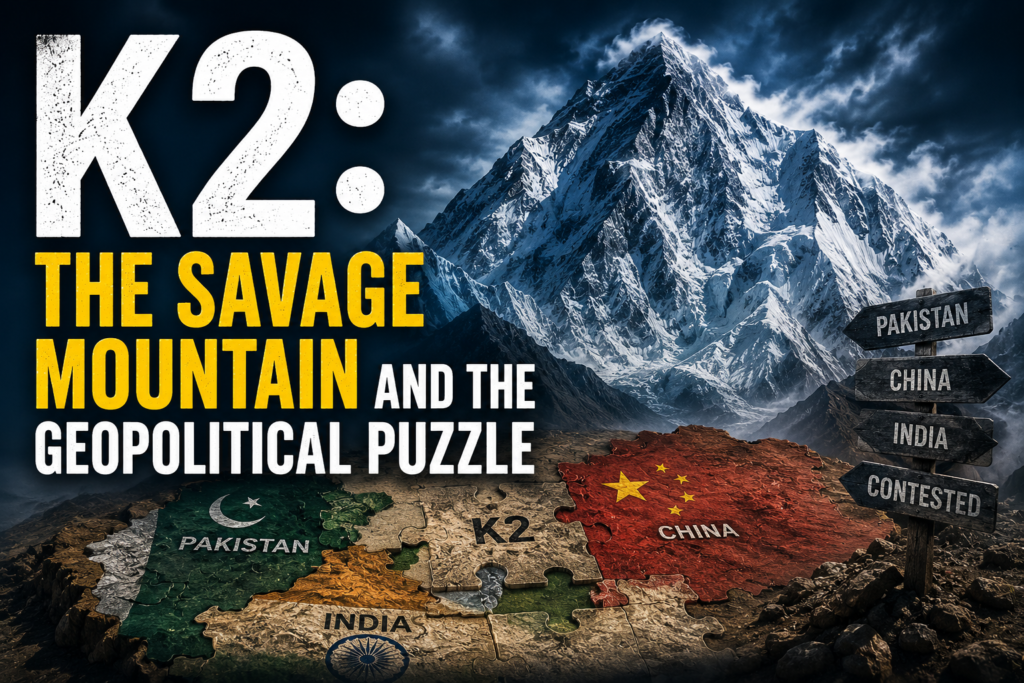
Because of this diplomatic complexity, India officially recognizes Kangchenjunga (8,586 m) as its highest peak. Unlike K2, Kangchenjunga lies on the border of Sikkim and Nepal and is under undisputed Indian administration.
Why the Distinction Matters
For travelers and geography enthusiasts, the distinction is vital. While K2 is taller, it is inaccessible for standard tourism from the Indian side due to the Line of Control and the remote, contested nature of the Gilgit-Baltistan region. Most K2 expeditions are organized through Skardu, Pakistan. For those looking to experience the grandeur of India’s highest peaks, the majestic landscapes of Sikkim or the high-altitude vistas of Uttarakhand offer a more accessible and legally unambiguous journey.
Kangchenjunga: Discovering India’s Majestic Crown
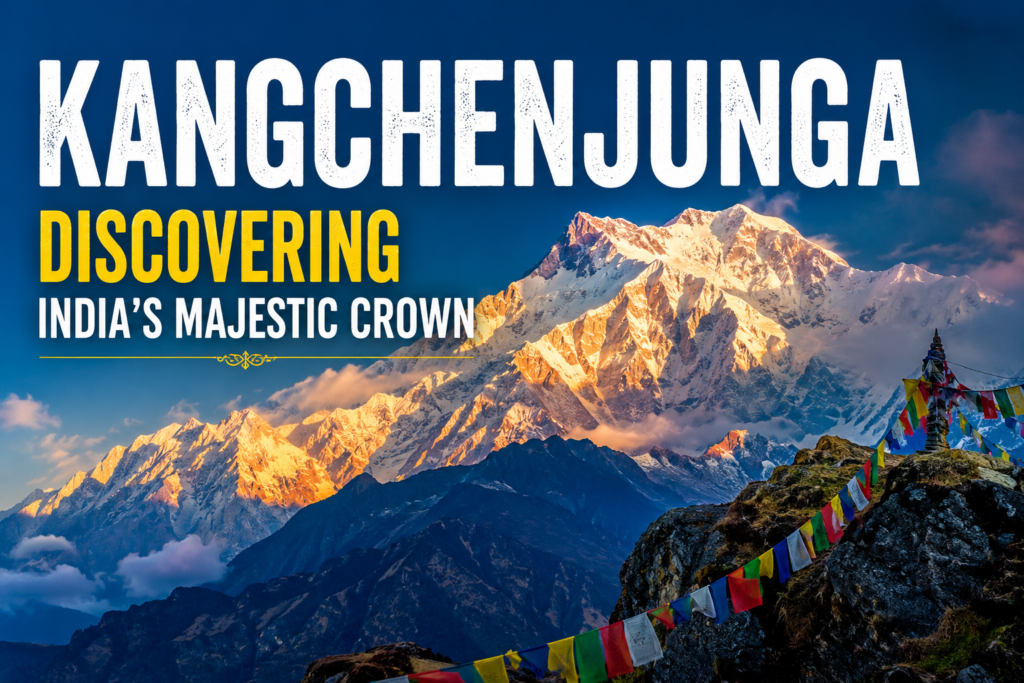
Rising to a staggering 8,586 meters (28,169 ft), Kangchenjunga stands as the third-highest mountain in the world and the official highest peak in India. Nestled in the heart of the Eastern Himalayas, it straddles the border between the Indian state of Sikkim and Nepal, serving as a breathtaking guardian of the region.
The Pride of Sikkim: Why It Reigns Supreme
While global mountaineering lists often mention K2, that peak sits in a region outside of current Indian administration. For travelers and citizens alike, Kangchenjunga is the undisputed monarch of Indian summits.
Its name, derived from Tibetan roots, translates to the “Five Treasures of the Great Snow,” representing gold, silver, gems, grain, and holy books. This is not merely a mountain; it is a sacred entity. In deference to local spiritual beliefs, many climbers historically stop just short of the absolute summit, honoring the Sikkimese tradition that keeps the peak inviolate.
A UNESCO Heritage Landscape
The area surrounding the peak is home to the Khangchendzonga National Park, India’s first “Mixed Heritage” UNESCO World Heritage site. This extraordinary landscape is a biodiversity hotspot, sheltering rare species like the snow leopard and the red panda. From the sprawling Zemu Glacier to the turquoise-hued Samiti Lake, the region offers some of the most spectacular trekking and sightseeing experiences on the planet.
Experience the Majesty with Seven Sands Tourism
Witnessing the grandeur of Kangchenjunga is a dream for many, and at Seven Sands Tourism, we turn that dream into a seamless reality. Based in Bangalore, we specialize in curating premium, personalized travel experiences that bring you closer to the Himalayas without the stress of logistics.
Why travel with us?
- Deep Local Expertise: We handle everything from Inner Line Permits (ILP) to flight connections and private transfers, ensuring a smooth transition from the Deccan plateau to the high-altitude bliss of Sikkim.
- Tailored Itineraries: Whether you want a luxury view from a hillside retreat in Pelling or a guided excursion through the scenic beauty of the national park, we design every moment to fit your pace.
- End-to-End Support: Our team provides dedicated support, ensuring you have complete peace of mind while you explore the “Five Treasures of Snow.”
The Himalayas are calling. Whether it’s for a romantic escape or a memorable family expedition, let Seven Sands Tourism be your guide to the highest peak in India.
Ready to start your journey? Contact us today and let’s craft your perfect Himalayan getaway!
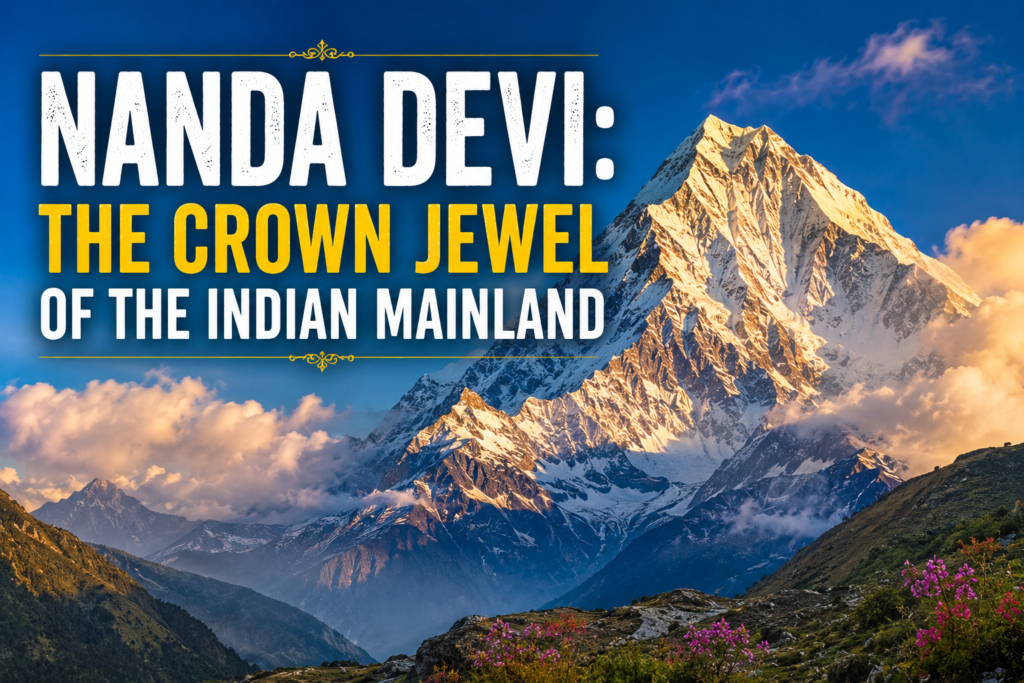
Nanda Devi: The Crown Jewel of the Indian Mainland
Standing proudly at an elevation of 7,816 meters (25,643 ft), Nanda Devi is a mountain of profound significance. While it is the second-highest mountain in India, it holds the prestigious title of being the highest peak located entirely within the Indian mainland. Located in the Garhwal Himalayas of Uttarakhand, this twin-peaked massif is far more than a geographical landmark—it is a sacred sanctuary steeped in history, spirituality, and rugged natural beauty.
The Goddess of the Himalayas
For the local communities of Kumaon and Garhwal, Nanda Devi is not merely a mountain; she is the patron goddess and “Protector” of the region. Revered as Raj Rajeshwari (the Queen Goddess), her presence dominates the landscape. The deep devotion locals feel for the peak is most visible during the Nanda Devi Raj Jat Yatra, a sacred pilgrimage held every twelve years, where devotees trek through high passes to honor her. This reverence has helped keep the mountain pristine, as it remains guarded by a “barrier ring” of high peaks, making it one of the most secluded and protected environments in the Himalayas.
A UNESCO World Heritage Sanctuary
The area surrounding the peak is protected as the Nanda Devi National Park, a UNESCO World Heritage site and Biosphere Reserve. This dramatic wilderness serves as a crucial habitat for endangered species, including the elusive snow leopard, the Himalayan musk deer, and the vibrant Himalayan monal. Due to its fragile ecosystem, access to the “Inner Sanctuary” is highly restricted, allowing nature to thrive in relative silence. Visitors can, however, explore the breathtaking outer trails that offer awe-inspiring views of the massif and its surrounding glaciers.
Experience the Majesty with Seven Sands Tourism
At Seven Sands Tourism, we specialize in turning the rugged beauty of the Himalayas into a comfortable, unforgettable experience. Whether you are a photography enthusiast, a spiritual seeker, or a family looking to witness the grandeur of Uttarakhand’s peaks, we ensure your journey is seamless and stress-free.
Why choose Seven Sands Tourism?
- Logistical Mastery: We manage the complex permits and private transfers required to traverse the mountain regions of Uttarakhand, allowing you to focus on the breathtaking scenery.
- Curated Explorations: Our local experts design itineraries that take you to the best viewpoints and heritage sites, balancing adventure with the premium comfort you expect.
- Commitment to Conservation: We promote responsible, eco-friendly tourism, ensuring your visit respects the sanctity of Nanda Devi and its delicate surroundings.
Ready to witness the glory of India’s highest mainland peak? Don’t let the complexities of mountain travel deter you. Contact Seven Sands Tourism today to book your bespoke Uttarakhand holiday package. Let us guide you to the heart of the Garhwal Himalayas for an experience that is as divine as it is memorable.
Table of Contents
Frequently Asked Questions (FAQs)
Which is officially the highest mountain peak in India?
Kangchenjunga is officially the highest mountain peak in India, standing at 8,586 meters (28,169 ft) on the border between Sikkim and Nepal. While K2 is taller, it is not located in Indian-administered territory.
What is the difference between Kangchenjunga and Nanda Devi?
Kangchenjunga (8,586 m) is the highest peak in India and is shared with Nepal. Nanda Devi (7,816 m) is the second-highest mountain in India but holds the title of the highest peak located entirely within the Indian mainland.
Is it possible to climb Kangchenjunga or Nanda Devi?
Climbing these peaks requires elite mountaineering skills and professional permits. However, Seven Sands Tourism offers curated holiday packages that allow you to witness these majestic peaks from breathtaking, accessible viewpoints without needing expert climbing experience.
What is the best time to visit the Himalayan regions in India?
The ideal window for visiting Sikkim and Uttarakhand is typically from March to May (for clear skies and blooming flora) and October to November (for crisp, panoramic mountain views). Avoid the monsoon months (July–September) due to the risk of landslides.
Do I need special permits to visit places like Sikkim?
Yes. Indian nationals require an Inner Line Permit (ILP) to access certain parts of Sikkim, while specific border areas may require additional permits. Seven Sands Tourism handles all logistical permit requirements for our guests to ensure a hassle-free trip.
What are the common health precautions for high-altitude travel?
It is essential to acclimatize by climbing gradually, staying hydrated, and avoiding alcohol. Always carry basic first-aid, consult your doctor regarding altitude sickness (AMS) medication before your trip, and follow the guidance provided by your tour operator.
How can I plan a comfortable trip to the Himalayas?
Avoid “extremely cheap” packages that compromise on safety and vehicle quality. For a comfortable experience, choose a reputable agency like Seven Sands Tourism that provides reliable private transportation, hand-picked accommodations, and expert local guides.
What makes Seven Sands Tourism the best choice for a Himalayan trip?
We specialize in creating premium, bespoke travel experiences. From securing your necessary travel permits and organizing seamless airport transfers to curating itineraries that respect local culture, we handle the logistics so you can focus on the unparalleled beauty of the Himalayas.