Executive Summary & Welcome from Seven Sands Tourism
At Seven Sands Tourism, headquartered in Bengaluru, we have curated and led customized spiritual, cultural, and heritage journeys across India and international destinations for over a decade. The transformation of Ayodhya—the eternal city on the banks of the sacred Sarayu River—into a premier global pilgrimage and cultural destination is one of the most monumental shifts in modern travel history.
Whether you are embarking on a deep-seated spiritual journey, exploring ancient civilizational archaeology, or seeking a seamless family holiday with top-tier logistical support, this comprehensive master guide is designed to serve as your ultimate resource. Grounded in local experience, historical verification, and practical travel logistics, this guide covers every major spiritual landmark, historical site, cultural hub, and practical detail you need to know before visiting Ayodhya.
Embark on a soulful journey with our Kashi Ayodhya Tour Package 3 Nights 4 Days from Bangalore, specially crafted for…
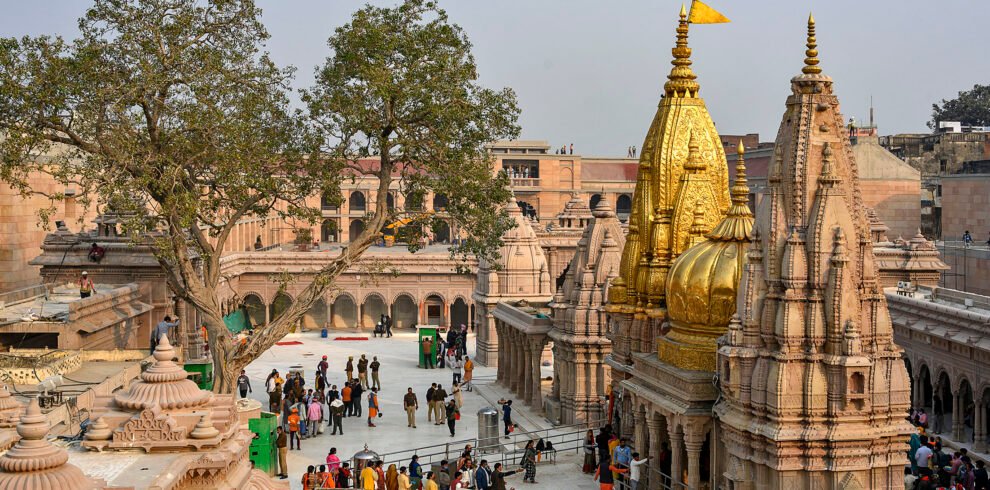
Experience divine bliss with our Kashi Ayodhya Tour Package from Bangalore 4N/5D, designed by Seven Sands Tourism for devotees seeking…
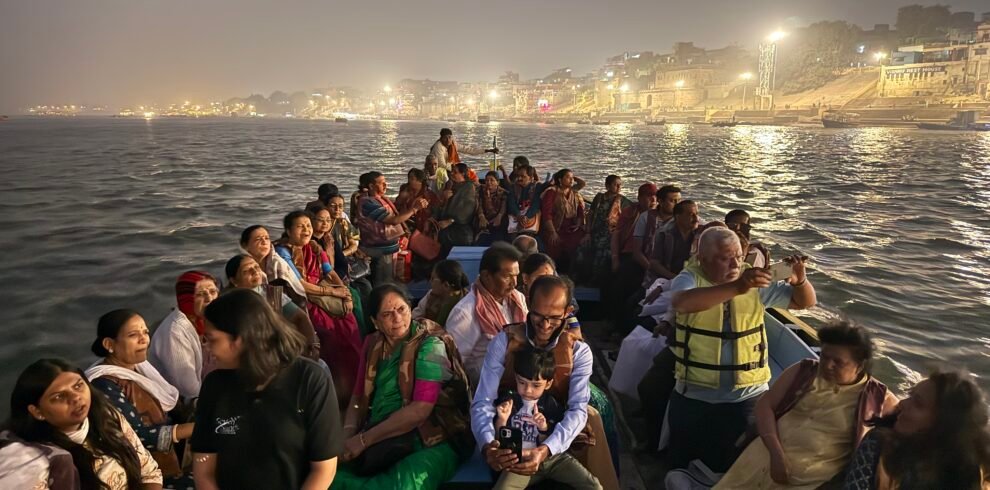
Embark on a soulful journey with our Ayodhya Varanasi flight tour package from Bangalore 3 Nights 4 Days from Bangalore,…
Introduction to Ayodhya: The Eternal City of Dharma
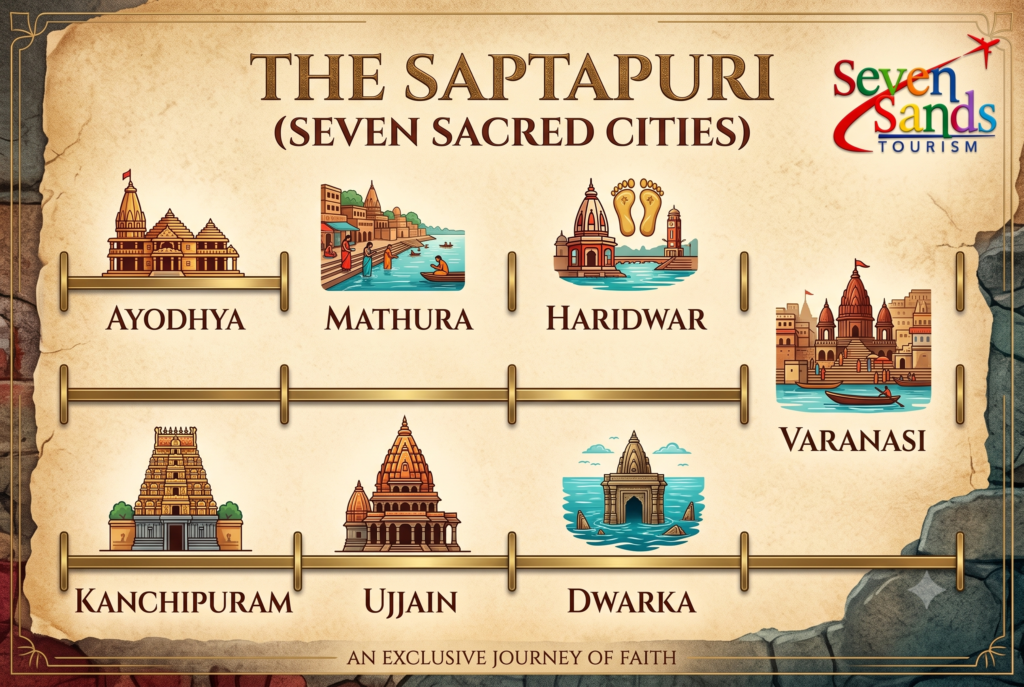
Ayodhya, historically known as Saket, holds an unmatched place in the civilizational ethos of India. Located in the heart of Uttar Pradesh along the tranquil Sarayu River, Ayodhya is recognized in Hindu scriptures as one of the Saptapuri—the seven most sacred cities capable of bestowing Moksha (spiritual liberation).
The city’s narrative is inextricably bound to the Ramayana, the timeless epic composed by Sage Valmiki. Ayodhya serves as the capital of the ancient Suryavanshi (Solar Dynasty) Kings—a lineage spanning Ikshvaku, Harishchandra, Raghu, and Dasharatha—culminating in the advent of Lord Rama, the seventh avatar of Lord Vishnu.
For centuries, pilgrims have traversed the Indian subcontinent to touch the sacred soil of Ayodhya. Modern Ayodhya seamlessly weaves its deep antiquarian origins with contemporary infrastructure. World-class highways, modern railway terminals, luxury hotels, and international airport connectivity now allow visitors to experience ancient traditions alongside modern travel standards.
Core Spiritual & Religious Landmarks
Embark on a soul-stirring pilgrimage through the revered Ayodhya Sacred Circuit, curated for travelers seeking deep spiritual resonance and timeless heritage. This holy journey takes you through iconic sanctums, starting at the grand Ram Janmabhoomi (Birthplace Temple), the watchful heights of Hanuman Garhi (Sentry Citadel), and the ornate beauty of Kanak Bhawan (Palace of Gold).
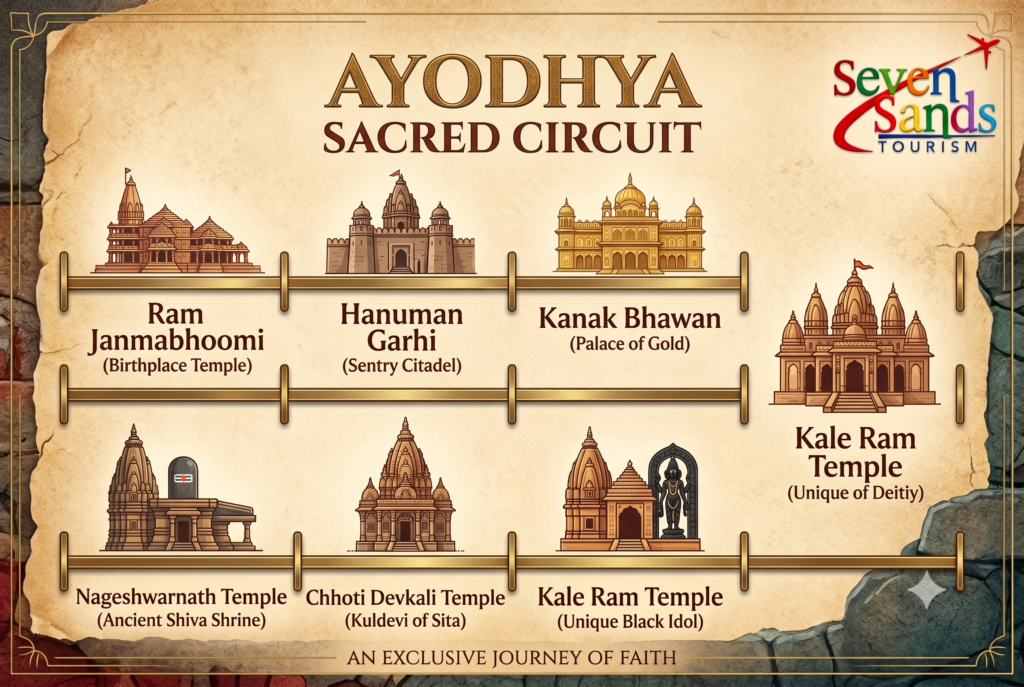
Continue your devotional path across ancient roots with blessings at the historic Nageshwarnath Temple dedicated to Lord Shiva, the protective grace of Chhoti Devkali Temple (Kuldevi of Mata Sita), and the sacred darshan at Kale Ram Temple featuring its unique black stone idol. Perfectly planned for an enriching temple tour, this circuit offers devotees an unforgettable encounter with Ayodhya’s divine legacy, architectural brilliance, and profound religious history.
1. Ram Janmabhoomi Temple Complex
Historical Context & Cultural Resonance
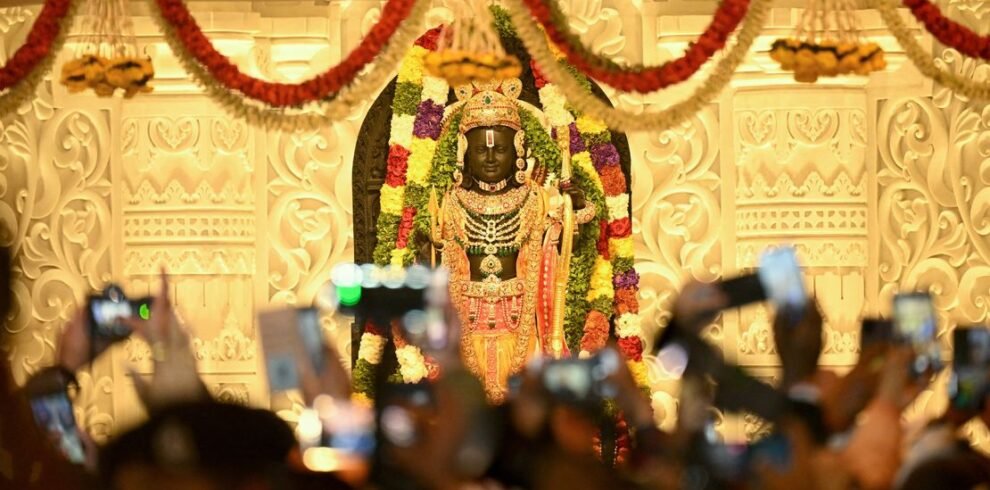
The Ram Janmabhoomi Temple stands as the spiritual heart of Ayodhya, marking the precise site traditionally venerated as the birthplace of Lord Rama (Ram Lalla). The site’s documented history spans centuries, reflecting continuous devotion, historical shifts, and ultimate restoration. The inauguration of the grand temple in January 2024 marked a historic landmark in Indian cultural history, drawing global attention to Ayodhya’s rich legacy.
Architectural Mastery: Nagara Style Excellence
Designed by the renowned Sompura family—architects of legacy temples across India—the Ram Janmabhoomi Temple showcases classical Nagara Architectural Style, celebrated for its soaring spires (Shikharas) and tiered sanctums (Mandapas).
- Construction Scale: Built entirely out of high-grade pink sandstone quarried from Bansi Paharpur in Rajasthan.
- Structural Integrity: The entire edifice is constructed without the use of iron or steel, utilizing traditional interlocking stone joining techniques designed to endure for over 1,000 years.
- Dimensions: The temple spans 380 feet in length, 250 feet in width, and rises to a height of 161 feet.
- Architectural Features:
- Pillars & Carvings: 392 intricately carved stone pillars and 44 customized teakwood doors plated with virgin gold.
- The Mandapas: Five distinct structural halls—Kudru Mandapa, Nritya Mandapa, Rang Mandapa, Kirtan Mandapa, and Prarthana Mandapa.
- Foundation Innovation: To withstand seismic activities and riverbed shifts, the base is supported by a 14-meter-thick roller-compacted concrete pad engineered with input from top structural institutes.
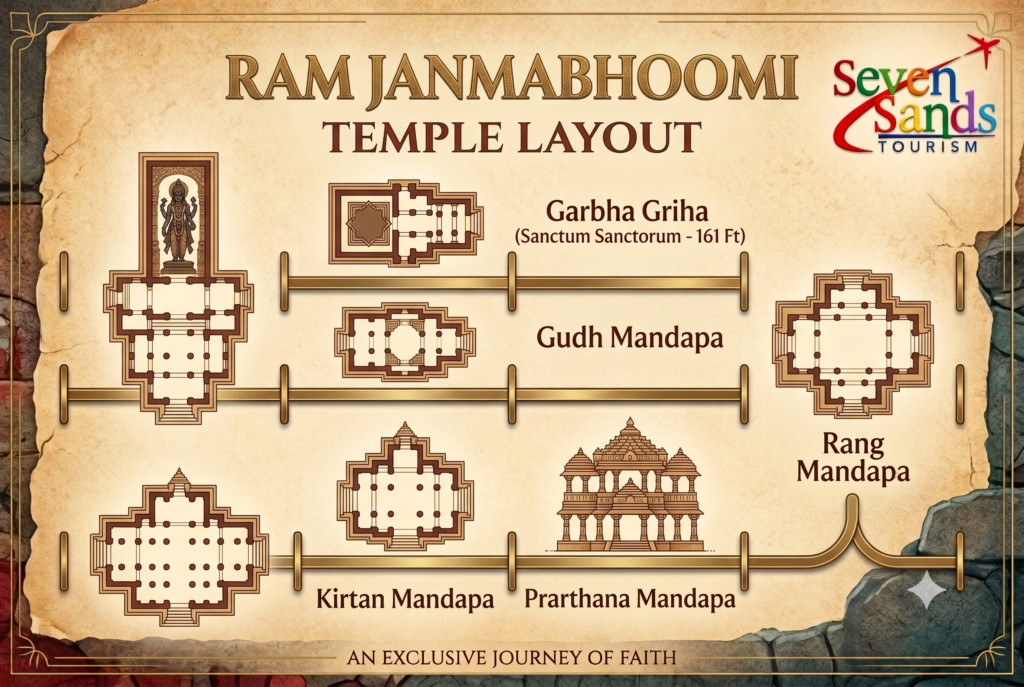
Discover the sacred geometry and magnificent Nagara-style architecture of the Shri Ram Janmabhoomi Mandir in Ayodhya. At the apex lies the divine Garbha Griha (Sanctum Sanctorum) rising to an imposing 161 feet, housing the revered deity. Moving outward, the temple flows seamlessly through its sacred assembly halls: the intimate Gudh Mandapa, the ceremonial Nritya Mandapa, and expansive spaces dedicated to communal devotion, including the Rang Mandapa, Kirtan Mandapa, and Prarthana Mandapa.
Designed to guide pilgrims through an uplifting spiritual transition from the outer courtyards to the ultimate sanctum, this masterfully engineered layout blends timeless Vedic Vastu Shastra with grand monumental heritage.
Visitor Logistics, Timings & Access Protocols
- Darshan Timings: * Morning Session: 6:30 AM to 12:00 PM
- Evening Session: 2:00 PM to 10:00 PM
- Aarti Schedules (Pre-Booking Recommended):
- Shringar Aarti: 6:30 AM
- Bhog Aarti: 12:00 PM
- Sandhya Aarti: 7:30 PM
- Security & Facilities: High-level security screening is mandatory. Electronic items, mobile phones, smartwatches, leather belts, and bags are prohibited inside the inner security zone. Free locker services (Amanat Griha) and wheelchair assistance are managed on-site by trained volunteers.
2. Hanuman Garhi
Historical & Mythological Significance
Perched high atop a central hillock accessible by 76 wide stone steps, Hanuman Garhi is a 10th-century fort-temple dedicated to Lord Hanuman. According to local traditions and the Ayodhya Mahatmya, Lord Rama assigned Hanuman the duty of guarding the city upon his return to Ayodhya. By long-standing tradition, pilgrims pay their respects at Hanuman Garhi before visiting the Ram Janmabhoomi Temple.
Follow the sacred, age-old footsteps of devotees with the Traditional Ayodhya Pilgrimage Sequence, crafted to give travelers a spiritually complete and authentic darshan experience. The journey begins with Step 1: Holy Dip in the purifying waters of the sacred Sarayu River at Ram Ki Paidi, cleansing body and mind. Next is Step 2: Guardian Bow, where pilgrims visit the fort-like Hanuman Garhi to seek blessings and permission from Lord Hanuman, the eternal protector of the holy city.
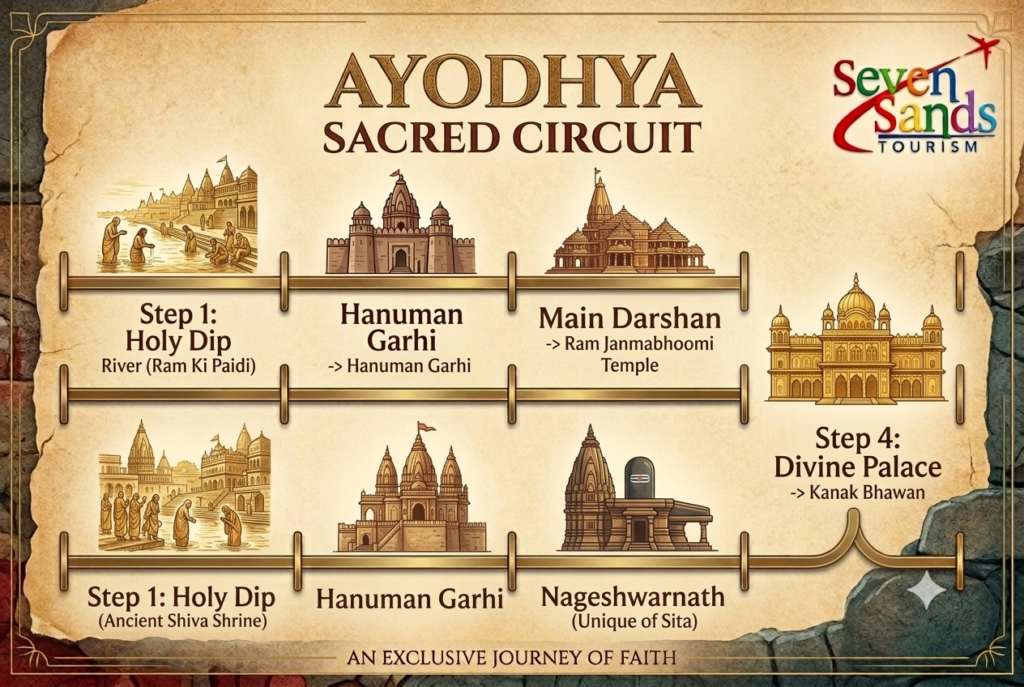
This leads to the pinnacle of the pilgrimage, Step 3: Main Darshan at the magnificent Ram Janmabhoomi Temple, offering heartfelt prayers before Lord Rama at his revered birthplace. Finally, conclude your divine path with Step 4: Divine Palace at Kanak Bhawan, the opulent palace sanctum celebrating the eternal bond of Rama and Sita. This step-by-step route ensures a harmonious, culturally profound, and unforgettable spiritual tour of Ayodhya.
Architecture & Ambiance
Constructed in the layout of a quadrupled fort (Garh) with circular bastions at each corner, the temple complex features a central courtyard containing a shrine of Lord Hanuman seated in the lap of his mother, Anjani. The elevated position offers wide panoramic views over the old city of Ayodhya.
- Key Highlights: A silver-embellished inner shrine, continuous chant recitations (Hanuman Chalisa and Sundarkand), and iconic local sweet offerings, particularly Laddus made from pure ghee and gram flour.
- Best Time to Visit: Early morning around 5:00 AM during the Mangala Aarti or late evenings to witness the vibrant night Aarti.
3. Kanak Bhawan (The Palace of Gold)
History & Royal Legend
Kanak Bhawan is one of Ayodhya’s most aesthetically striking temples. Legend holds that this palace was gifted to Devi Sita by Queen Kaikeyi immediately following Sita’s marriage to Lord Rama. Over centuries, the original structure fell into ruin and was restored across different eras—most notably rebuilt by King Vikramaditya and later reconstructed in its present grand form in 1891 by Maharani Vrishbhanu Kuwari of Orchha.
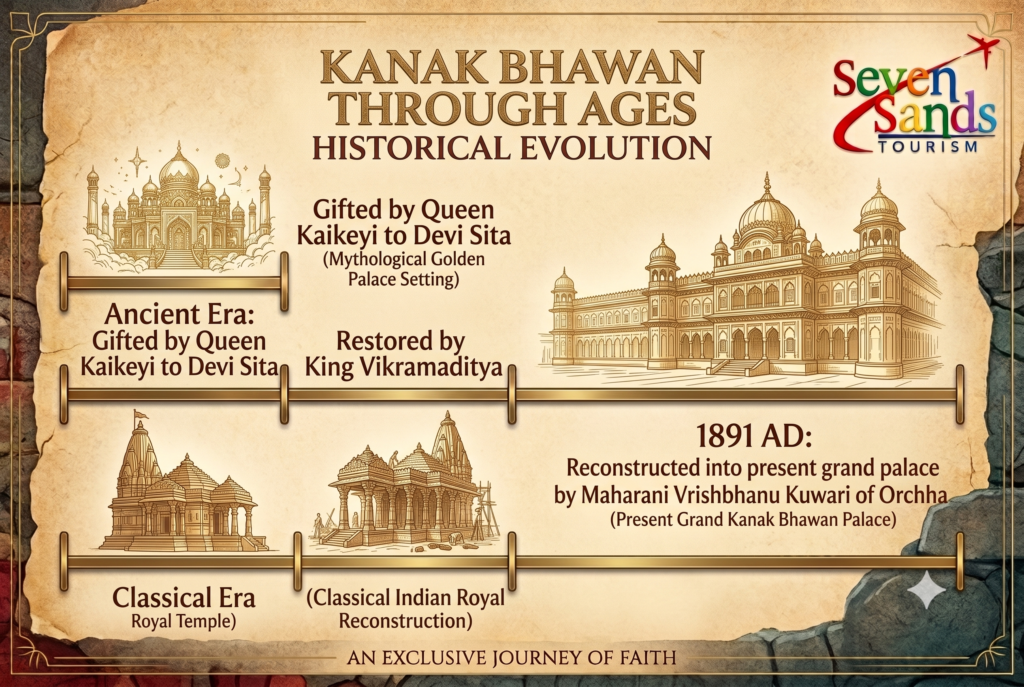
Step into centuries of romance, devotion, and royal heritage with the timeless chronicle of Kanak Bhawan (The Palace of Gold). According to sacred lore, its story begins in the Ancient Era, when Queen Kaikeyi gifted this splendid golden palace to Devi Sita upon her arrival in Ayodhya as a divine welcome present. Over the millennia, this sacred site witnessed great revivals—most notably during the Classical Era, when legendary ruler King Vikramaditya painstakingly restored its sacred majesty.
Its contemporary architectural grandeur took shape in 1891 AD, when Maharani Vrishbhanu Kuwari of Orchha rebuilt it into the magnificent Bundela-style palace-temple admired by millions today. A must-visit landmark on any Ayodhya pilgrimage, Kanak Bhawan stands as an eternal symbol of devotion, artistic elegance, and enduring historical legacy.
Architectural Splendor
The temple architecture displays clear Bundelkhandi and Rajasthani royal palace influences:
- Open-air central courtyard (Chowk) surrounded by double-storied arched balconies.
- Intricate ceiling murals depicting scenes from the Ramayana, painted using natural mineral dyes.
- The inner sanctum houses three sets of gold-plated idols of Lord Rama and Devi Sita, representing different historical restorations.
- Visiting Hours: 8:00 AM to 11:30 AM | 4:30 PM to 9:00 PM.
- Seven Sands Pro-Tip: Visit during the evening Sangeet Seva, when classical devotional classical musicians sing traditional Dhrupad and Bhajans dedicated to the divine couple.
4. Nageshwarnath Temple
Mythological Foundations
Dedicated to Lord Shiva, the Nageshwarnath Temple holds historical weight as one of the oldest active places of worship in Ayodhya. According to local lore recorded in the Skanda Purana, the temple was established by Kush, the son of Lord Rama.
The Legend of Kush & Kumudvati:
While taking a holy dip in the Sarayu River, Kush lost his sacred armlet (Kada). The armlet was retrieved by a Nag-Kanya (Serpent Maiden) named Kumudvati, who fell in love with him. As Kumudvati was a devotee of Lord Shiva, Kush constructed this grand temple in her honor to mark their union and establish peace between the Ikshvaku Dynasty and the Nagas.
Cultural Importance & Maha Shivratri
Nageshwarnath Temple serves as the primary sanctuary for Shaivite traditions within Ayodhya.
- During Maha Shivratri, the temple hosts grand night-long celebrations, featuring continuous Abhishekam with Sarayu river water, milk, and sacred herbs.
- The temple’s proximity to Ram Ki Paidi makes it a ideal stop after evening riverbank strolls.
5. Chhoti Devkali & Badi Devkali Temples
Sacred Lineage of the Clan Deity
- Chhoti Devkali Temple: Located near Naya Ghat, this shrine is traditionally associated with Devi Sita. According to local lore, Sita brought an idol of Goddess Girija (Parvati) to Ayodhya after her marriage, and King Dasharatha built a designated temple for her daily worship.
- Badi Devkali Temple: Located on the city outskirts, this ancient shrine is revered as the temple of the Kuldevi (ancestral clan goddess) of the Solar Dynasty. King Raghu and Lord Rama were said to perform daily prayers here prior to major events.
6. Kale Ram Temple
Located near the banks of the Sarayu River, the Kale Ram Temple is unique because it houses rare idols of Lord Rama, Sita, Lakshmana, Bharata, Shatrughna, and Hanuman carved out of a single block of black basalt stone. Historians trace these idols back to the era of King Vikramaditya’s restoration of Ayodhya, hidden underwater in the Sarayu River to protect them during medieval invasions before being recovered centuries later.
Historical, Archaeological & Riverfront Landmarks
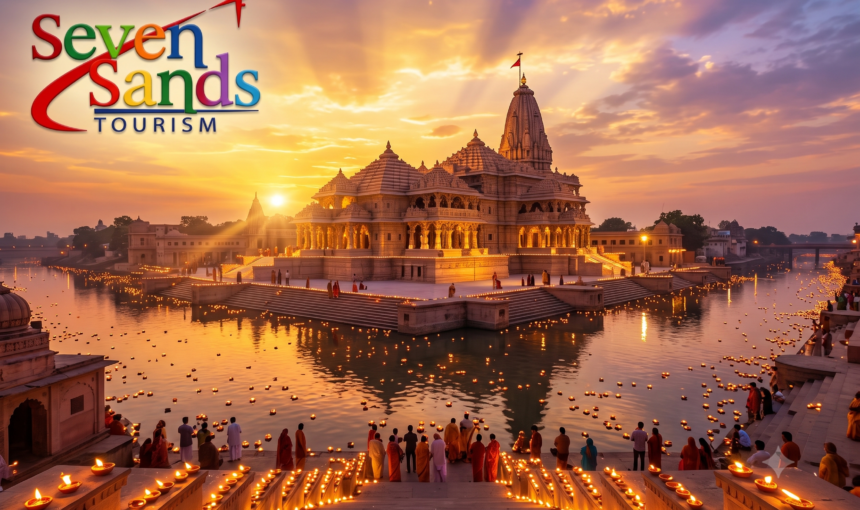
Immerse yourself in the timeless spiritual aura and architectural wonders of Ayodhya along its sacred waters and historic neighborhoods. Witness divine evening rituals along the banks of the Sarayu River (Ghats & Arti), stroll through the vibrant and illuminated steps of Ram Ki Paidi, and experience profound serenity at Guptar Ghat, the legendary moksha landmark where Lord Rama entered Jal Samadhi. Deepen your historical voyage with visits to Treta Ke Thakur, the revered site linked to ancient royal sacrifices,
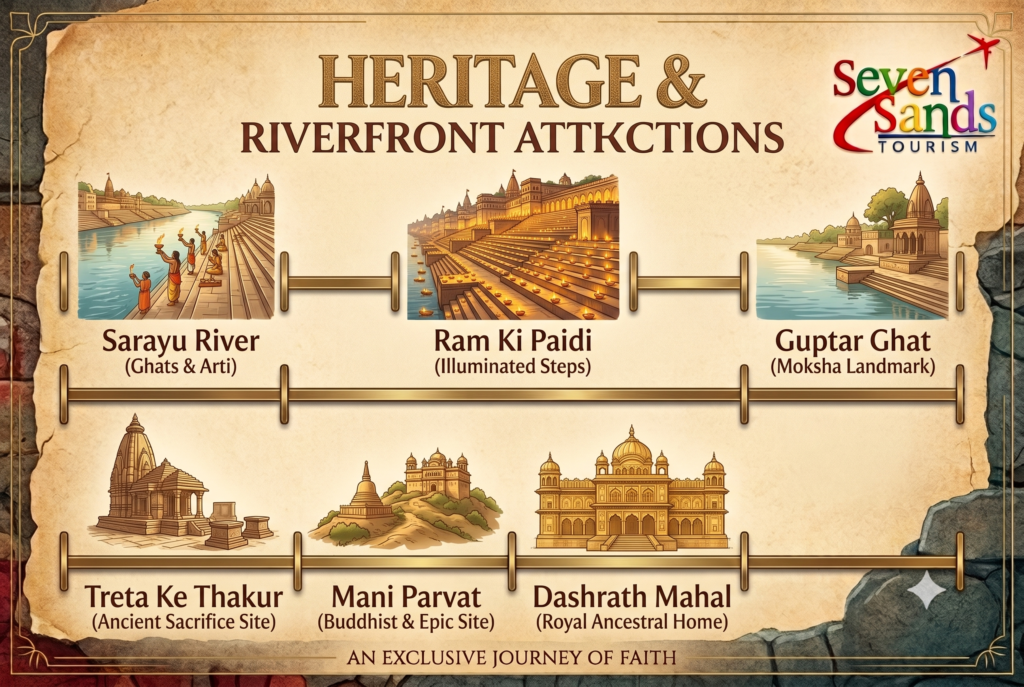
Explore the mythological and archaeological wonders of Mani Parvat, and marvel at Dashrath Mahal, the opulent ancestral home and royal palace of King Dashratha. A quintessential heritage circuit curated for travelers seeking divine culture, riverside tranquility, and epic history.
1. The Sacred Sarayu River & Ghats
The Sarayu River is more than a body of water; it is considered a living witness (Sakshi) to the entire cycle of Lord Rama’s earthly incarnation. The riverbanks are lined with dozens of historic stone-paved ghats.
Key Ghats & Practical Details
| Ghat Name | Historical / Mythological Association | Key Activity | Recommended Visiting Time |
| Naya Ghat | Central entry point for riverfront activities; historically renovated by regional royalty. | Evening Sarayu Maha Aarti, Boat Rides, Photography. | 5:30 PM – 7:30 PM |
| Guptar Ghat | Believed to be the exact spot where Lord Rama performed Mahaprasthan (earthly departure). | Peaceful meditation, ritual baths, heritage walk. | 6:00 AM – 8:30 AM |
| Lakshman Ghat | Associated with Lakshmana’s departure from the physical world. | Sacred baths, quiet prayer. | Morning |
| Janki Ghat | Built by devotees dedicated to Sita; features smooth steps and wide bathing spaces. | Quiet morning pujas, serene boat access. | Morning / Afternoon |
                     SARAYU EVENING MAHA AARTI
┌──────────────────────────────────────────────────────────────────┐
│ Time: 6:00 PM (Winter) / 7:00 PM (Summer)                       │
│ Location: Central Naya Ghat Platform                             │
├──────────────────────────────────────────────────────────────────┤
│ Highlights: Synchronized brass lamp rituals, Vedic chanting,   │
│ flower offerings, and floating diyas on the river stream.       │
└──────────────────────────────────────────────────────────────────┘
2. Ram Ki Paidi
Infrastructure & Architectural Modernization
Ram Ki Paidi is a major landmark along the Sarayu riverbank, featuring a series of connected stone steps (Paidis) and wide open plazas. Originally built to manage water flow, the site underwent modern hydraulic restoration, bringing a continuous stream of fresh Sarayu water through pumping stations.
Cultural Events & World Records
- Deepotsav Extravaganza: During Diwali, Ram Ki Paidi hosts the world-famous Deepotsav festival, setting multiple Guinness World Records by lighting over 2 million traditional clay lamps (diyas) across the ghats.
- Laser & Sound Show: Every evening, Ram Ki Paidi hosts an advanced 3D laser light and sound show that projects stories from the Ramayana onto water curtains and background structures.
3. Guptar Ghat & Surrounding Gardens
Located roughly 10 kilometers west of Ayodhya’s central temple zone near the Cantonment area, Guptar Ghat offers a serene retreat.
┌──────────────────────────────────────────────────────────────────┐
│                      GUPTAR GHAT HIGHLIGHTS                      │
├──────────────────────────────────────────────────────────────────┤
│ • Historical Significance: Site of Lord Rama's Mahaprasthan.     │
│ • Key Shrines: Gupteshwar Mahadev Temple, Charan Paduka Temple.  │
│ • Ambiance: Clean riverfront, paved walks, landscaped gardens.   │
│ • Transportation: Accessible via battery rickshaw or auto.      │
└──────────────────────────────────────────────────────────────────┘
4. Treta Ke Thakur
Located near Naya Ghat, Treta Ke Thakur marks the site where Lord Rama is believed to have performed the ancient Ashvamedha Yajna (Vedic horse sacrifice).
- The shrine houses ancient statues sculpted from black sandstones.
- Important Access Note: The temple opens its doors to the general public only once a year on the auspicious occasion of Ekadashi (specifically Kartic Shukla Ekadashi). If your itinerary aligns with this date, it is a rare spiritual opportunity.
5. Mani Parvat & Sugriva Parvat
Archaeological & Mythological Layers
- Mani Parvat: A 65-foot-high mound located in southern Ayodhya. Legend links it to the Ramayana, holding that a fragment of the Sanjeevani herb mountain carried by Lord Hanuman broke off and fell here.
- Buddhist Connection: Archaeological surveys by Sir Alexander Cunningham identified Mani Parvat as a site where the Buddha spent several rain retreats (Vassa), housing ancient stupa remnants built during the Mauryan Empire under Emperor Ashoka.
- Jhula Mela Festival: During the Hindu month of Shravan (July-August), Mani Parvat hosts the famous Jhula Mela, where idols from surrounding temples are brought here to be placed on ornate swings.
6. Dashrath Mahal (Badi Jagah)
Situated in the heart of Ayodhya’s old town, a short walk from Hanuman Garhi, Dashrath Mahal marks the site of the ancestral palace of King Dasharatha.
- Atmosphere: Entered through a massive painted gateway (Dwar), the compound features an inner courtyard where devotional music (Bhajans) is played daily.
- Significance: It serves as the spiritual headquarters for the Ramanandi Sampradaya sect of sadhus, offering visitors insight into classical monastic daily life.
Cultural Hubs, Museums & Excursions
1. Ram Katha Park & International Ram Katha Museum
Ram Katha Park
A widely planned open-air cultural arena equipped with modern amphitheatres, landscaped lawns, and exhibition spaces. It hosts daily cultural performances, Ram Lila plays performed by visiting international troupes (from Thailand, Indonesia, Sri Lanka, and Nepal), and religious discourses (Katha).
International Ram Katha Museum
Located adjacent to the park, this museum serves as a major repository for scholars and heritage enthusiasts.
- Exhibits: Houses rare collections of Ramayana-era artifacts, terracotta statues, copper plate inscriptions, palm-leaf manuscripts, ancient coinage, and global artistic interpretations of the Ramayana.
2. Multi-Faith Heritage Connections
While primarily celebrated as a Hindu pilgrimage site, Ayodhya’s deep history includes rich contributions from multiple spiritual traditions.
                     MULTI-FAITH HERITAGE OF AYODHYA
┌────────────────────────────────────────────────────────────────────────┐
│ HINDUISM: Birthplace of Lord Rama; Saptapuri city.                     │
├────────────────────────────────────────────────────────────────────────┤
│ JAINISM: Birthplace of 5 Tirthankaras (Rishabhdev, Ajitnath, Abhinandannath,│
│ Sumatinath, and Anantnath).                                           │
├────────────────────────────────────────────────────────────────────────┤
│ BUDDHISM: Saket/Ayodhya served as a major center visited by Buddha.     │
├────────────────────────────────────────────────────────────────────────┤
│ SIKHISM: Blessed by visits from Guru Nanak Dev, Guru Tegh Bahadur,     │
│ and Guru Gobind Singh (marked by historic Gurudwaras).                 │
└────────────────────────────────────────────────────────────────────────┘
- Jain Heritage: Ayodhya is honored as the birthplace of five Tirthankaras, including the first Tirthankara, Lord Rishabhdev (Adinath). Prominent Jain temples include the Digambar Jain Temple at Raiganj, featuring a 31-foot statue of Lord Rishabhdev.
- Sikh Heritage: Ayodhya was visited by three Sikh Gurus: Guru Nanak Dev Ji, Guru Tegh Bahadur Ji, and Guru Gobind Singh Ji. The historic Gurudwara Brahmakund near the Sarayu River commemorates these visits and houses historical relics, including weapons attributed to Guru Gobind Singh Ji.
3. Nearby Excursions (Within 40 km)
Makhargha (Makhjan)
Located roughly 20 km from central Ayodhya, this site is associated with Sage Rishyasringa, where King Dasharatha performed the Putrakameshti Yajna (sacred ritual for offspring), leading to the birth of Rama, Lakshmana, Bharata, and Shatrughna.
Chhapaiya (Swaminarayan Temple)
Located 50 km from Ayodhya, Chhapaiya is the birthplace of Ghanshyam Pande, later known as Bhagwan Swaminarayan (founder of the Swaminarayan Sampradaya). The village features a grand marble temple complex, a dedicated museum, and conserved heritage structures.
Festivals, Rituals & Cultural Calendar
Planning your travel around Ayodhya’s vibrant socio-religious calendar offers an extraordinary experience. Here are the major annual cultural and religious events:
                          ANNUAL FESTIVAL CALENDAR
┌──────────────────────────────┬──────────────────────────────┬──────────────────────────────┐
│  MARCH - APRIL               │  JULY - AUGUST               │  OCTOBER - NOVEMBER          │
│  • Ram Navami                │  • Shravan Jhula Mela        │  • Deepotsav (Diwali)        │
│  • Birth Celebrations        │  • Swing Festival            │  • 14 Kosi / 5 Kosi Parikrama│
│  • Grand Processions         │  • Monsoon Festivities       │  • Kartik Purnima Bath       │
└──────────────────────────────┴──────────────────────────────┴──────────────────────────────┘
1. Ram Navami (March / April)
Celebrating the divine birth of Lord Rama, this is Ayodhya’s largest annual gathering. Millions of devotees converge on the city.
- Key Highlights: Midday Janmotsav rituals, continuous chanting, massive processions (Rath Yatra) featuring flower-decorated floats, and sacred dips in the Sarayu River.
2. Deepotsav & Diwali (October / November)
Ayodhya’s flagship modern cultural event organized by the Uttar Pradesh State Government alongside local institutions.
- Key Highlights: Millions of clay lamps illuminating the entire riverfront, grand dynamic light and sound projections, aerial drone shows depicting epic Ramayana scenes, and cultural troupes performing across the city.
3. The Sacred Parikramas (Circumambulations)
- 14 Kosi Parikrama: Devotees walk a 42-kilometer circular route around the broader perimeter of greater Ayodhya, performed during the auspicious month of Kartik.
- 5 Kosi Parikrama: A smaller 15-kilometer walk around the core historical inner city of Ayodhya. Devotees walk barefoot while singing devotional songs.
Practical Travel Guide & Seven Sands Insider Logistics
At Seven Sands Tourism, we prioritize seamless, stress-free travel. Below is an practical breakdown of logistical details to help you plan your visit to Ayodhya.
                           TRANSPORTATION HUB
                                   │
     ┌─────────────────────────────┼─────────────────────────────┐
     ▼                             ▼                             ▼
 AIR TRAVEL                    RAIL NETWORK                  ROADWAYS
 • Maharishi Valmiki Airport   • Ayodhya Dham Junction      • NH 27 (East-West Corridor)
   (AYJ - 10 km to center)       (Ayodhya Cantt - 10 km)    • Expressways from Lucknow
 • Lucknow Airport (LKO)       • Vande Bharat Express         and Varanasi
   (135 km distance)             Direct Connectivity
1. Transportation & How to Reach
By Air
- Maharishi Valmiki International Airport, Ayodhya (IATA: AYJ): Located just 10 km from the core temple zone, offering direct flights to major Indian metropolises including New Delhi, Mumbai, Bengaluru, Ahmedabad, and Kolkata.
- Lucknow International Airport (IATA: LKO): Located 135 km away (a smooth 2.5-hour drive via the Lucknow-Ayodhya Highway / NH 27). Ideal for travelers seeking expanded national and international flight connections.
By Rail
- Ayodhya Dham Junction (Code: AY): A newly redeveloped, state-of-the-art railway station located under 2 km from Ram Janmabhoomi. It features architectural design elements inspired by the Ram Mandir, complete with air-conditioned waiting lounges, food courts, and mechanized luggage handling.
- Ayodhya Cantt (Code: AYC): Located 10 km from the center, accommodating multiple long-distance Express and Superfast trains.
- Key Trains: High-speed Vande Bharat Express and Amrit Bharat Express services directly connect Ayodhya with New Delhi, Anand Vihar, and regional hubs.
By Road
- Ayodhya is situated along National Highway 27 (NH 27).
- Distance Key:
- Lucknow to Ayodhya: 135 km (~2.5 hours via four-lane highway)
- Varanasi to Ayodhya: 200 km (~4 hours via NH 228 / NH 27)
- Prayagraj to Ayodhya: 170 km (~3.5 hours)
- Gorakhpur to Ayodhya: 135 km (~2.5 hours)
2. Best Time to Visit & Seasonal Weather Overview
                      TEMPERATURE RANGE & CLIMATE
┌───────────────────┬──────────────────────┬────────────────────────────────┐
│ Season            │ Months               │ Avg Temp Range                 │
├───────────────────┼──────────────────────┼────────────────────────────────┤
│ Winter (Ideal)    │ October to March     │ 8°C - 25°C (Cool, Pleasant)    │
│ Summer            │ April to June        │ 28°C - 43°C (Hot, Sunny)       │
│ Monsoon           │ July to September    │ 24°C - 33°C (Moderate Rain)    │
└───────────────────┴──────────────────────┴────────────────────────────────┘
- October to March (Peak Season): Crisp, pleasant weather ideal for temple walks, riverfront exploration, and heritage sight-seeing.
- April to June (Summer): Warm conditions. If visiting during summer, schedule temple visits for early mornings (6:00 AM – 9:30 AM) and late evenings (5:30 PM – 9:00 PM).
- July to September (Monsoon): Lush green surroundings along the Sarayu River. High humidity, but lesser crowds across main shrines.
3. Local Cuisine, Dining & Food Etiquette
Ayodhya offers a rich culinary tradition rooted in pure vegetarian (Sattvik) practices. Meat and alcohol are strictly prohibited within the sacred city zone.
                      MUST-TRY AYODHYA CULINARY DELIGHTS
┌────────────────────────────────────────────────────────────────────────┐
│ 1. Bedmi Poori & Aloo Sabzi: Crisp lentil-stuffed poori served with   │
│    spiced potato gravy; traditional morning breakfast.                 │
├────────────────────────────────────────────────────────────────────────┤
│ 2. Ayodhya Rabri-Jalebi: Freshly fried golden jalebis served with      │
│    thickened, cardamom-infused rabri.                                 │
├────────────────────────────────────────────────────────────────────────┤
│ 3. Hanuman Garhi Laddus: Signature gram flour & pure ghee laddus.     │
├────────────────────────────────────────────────────────────────────────┤
│ 4. Makhan Malai / Nimish: Light, whipped milk-cream dessert available │
│    during the winter months.                                           │
├────────────────────────────────────────────────────────────────────────┤
│ 5. Sattvik Thali: Balanced traditional North Indian meals served without│
│    onion or garlic in local Bhojanalayas.                            │
└────────────────────────────────────────────────────────────────────────┘
4. Cultural Etiquette, Security & Dress Guidelines
To ensure a respectful and seamless visit, keep these key cultural tips in mind:
- Dress Code: Wear modest attire that covers shoulders and knees when visiting temples. Traditional Indian attire (Kurtas, Sarees, Salwar Kameez) or conservative western casuals are appropriate.
- Footwear Etiquette: Footwear must be removed before entering all temple complexes. Use designated shoe-holding stands (Joota Chappal Ghar) available near entry points.
- Security Precautions: The Ram Janmabhoomi security zone enforces strict guidelines. Leave cameras, electronic key fobs, leather items, power banks, and large bags in your hotel room or secure them in free official lockers prior to entry.
- Photography Regulations: Photography is strictly forbidden inside the inner sanctums of most major temples. Outdoor photography at Ram Ki Paidi, Sarayu Ghats, and public parks is permitted.
Recommended Itineraries by Seven Sands Tourism
To help you optimize your travel time, our team has crafted three balanced, battle-tested sample itineraries designed for different travel schedules.
Option A: Express Day Tour (1-Day Master Itinerary)
                       EXPRESS 1-DAY ITINERARY
┌───────────┬────────────────────────────────────────────────────────┐
│ Time      │ Activity                                               │
├───────────┼────────────────────────────────────────────────────────┤
│ 06:00 AM  │ Sacred Dip / Morning Walk at Ram Ki Paidi & Naya Ghat. │
│ 07:30 AM  │ Darshan at Hanuman Garhi Temple.                       │
│ 09:00 AM  │ Traditional Breakfast (Bedmi Poori & Jalebi).          │
│ 10:00 AM  │ Priority Entry & Darshan at Ram Janmabhoomi Temple.    │
│ 01:00 PM  │ Sattvik Lunch at a heritage Bhojanalaya.               │
│ 02:30 PM  │ Visit Kanak Bhawan & Dashrath Mahal.                  │
│ 04:30 PM  │ Explore Nageshwarnath Temple.                          │
│ 06:00 PM  │ Witness the Grand Sarayu Evening Maha Aarti.           │
│ 07:30 PM  │ Departure / Onward Journey.                            │
└───────────┴────────────────────────────────────────────────────────┘
Option B: Classical Spiritual & Heritage Experience (2 Days / 1 Night)
Day 1: Central Shrines & Riverfront Immersion
- Morning: Arrival via Ayodhya Airport/Station. Check into hotel. Begin with Hanuman Garhi and Kanak Bhawan.
- Afternoon: Enjoy a traditional lunch, followed by an afternoon tour of Dashrath Mahal and Treta Ke Thakur.
- Evening: Walk through Ram Ki Paidi, attend the Sarayu Evening Maha Aarti, and enjoy the 3D Laser & Sound Show.
- Night: Leisure walk along illuminated city corridors; dinner at hotel.
Day 2: Ram Janmabhoomi, Museums & Guptar Ghat
- Early Morning: Attend morning Darshan at Ram Janmabhoomi Temple Complex.
- Late Morning: Visit the International Ram Katha Museum and Ram Katha Park.
- Afternoon: Lunch, followed by a drive to Guptar Ghat. Explore Gupteshwar Mahadev Temple and the surrounding gardens.
- Late Evening: Souvenir shopping for local brassware, wooden handicrafts, and religious literature; evening departure.
Option C: The Sacred UP Golden Triangle Circuit (5 Days / 4 Nights)
Combine Ayodhya with North India’s most prominent spiritual destinations in a single itinerary:
                  SACRED UP GOLDEN TRIANGLE CIRCUIT
┌────────────────────────────────────────────────────────────────────────┐
│ Day 1: Arrive in Varanasi -> Kashi Vishwanath Darshan & Ganga Aarti.   │
├────────────────────────────────────────────────────────────────────────┤
│ Day 2: Varanasi Heritage Walk & Sarnath excursion -> Drive to Prayagraj│
├────────────────────────────────────────────────────────────────────────┤
│ Day 3: Prayagraj Triveni Sangam Bath -> Drive to Ayodhya.             │
├────────────────────────────────────────────────────────────────────────┤
│ Day 4: Full Day Ayodhya Circuit (Ram Janmabhoomi, Hanuman Garhi, Ghats)│
├────────────────────────────────────────────────────────────────────────┤
│ Day 5: Morning Guptar Ghat visit -> Departure from Ayodhya Airport.    │
└────────────────────────────────────────────────────────────────────────┘
Why Book Your Ayodhya Journey with Seven Sands Tourism?
As a trusted travel agency based in Bengaluru, Seven Sands Tourism brings deep local expertise and personalized service to spiritual travel.
┌────────────────────────────────────────────────────────────────────────┐
│                   THE SEVEN SANDS ADVANTAGE                            │
├────────────────────────────────────────────────────────────────────────┤
│ ✔ Tailor-Made Private Packages (Luxury sedan/SUV transfers & guides). │
│ ✔ Hand-Picked Accommodations (Validated premium 3-star to 5-star hotels)│
│ ✔ Special VIP Darshan Assistance (Aarti bookings & expedited access).  │
│ ✔ Complete Multi-City Circuits (Lucknow - Ayodhya - Varanasi - Kashi).│
│ ✔ Dedicated 24/7 On-Ground Support throughout your journey.           │
└────────────────────────────────────────────────────────────────────────┘
Whether you are organizing a family pilgrimage, an executive retreat, or a customized cultural heritage tour, our travel planners ensure that every detail—from airport reception to temple entry logistics—is managed smoothly.
Plan Your Spiritual Journey Today
Ayodhya is more than a historical destination; it is an enduring experience of devotion, architectural heritage, and timeless culture. Let Seven Sands Tourism craft your ideal trip to this sacred city.
- Head Office: Bengaluru, Karnataka, India
- Specialties: Kashi, Ayodhya, Char Dham, South India Temple Tours & International Holiday Packages
- Contact Our Travel Experts: Reach out to Seven Sands Tourism today for custom quotes, group bookings, or tailored itinerary advice.
Frequently Asked Questions (FAQs)
Q1: What is the distance between Ayodhya Airport and the Ram Janmabhoomi Temple?
Maharishi Valmiki International Airport is located approximately 10 km from the Ram Janmabhoomi Temple Complex. Taxi travel time typically ranges between 20 to 30 minutes, depending on local traffic flow.
Q2: Are electronic items allowed inside the Ram Janmabhoomi Temple?
No. Mobile phones, smartwatches, cameras, power banks, and other electronic devices are strictly prohibited within the temple’s inner security perimeter. Free, secure locker facilities (Amanat Griha) are provided on-site.
Q3: Is wheelchair assistance available for elderly pilgrims at major temples?
Yes. Wheelchairs and ramps are available at the Ram Janmabhoomi Temple Complex and Ram Ki Paidi. At Hanuman Garhi, due to the steep 76-step incline, battery-operated rickshaws bring passengers to the base, but ascending the stairs requires foot movement or local porter (Palki) support.
Q4: What is the optimal duration required to fully explore Ayodhya?
A focused 2-day, 1-night itinerary is ideal to explore all major temples, attend the Sarayu Aarti, visit historic ghats, and experience local heritage comfortably without rushing.
Plan Your Trip: Contact Seven Sands Tourism today to curate your customized Ayodhya tour package. Experiential spiritual travel, managed with care and expertise.