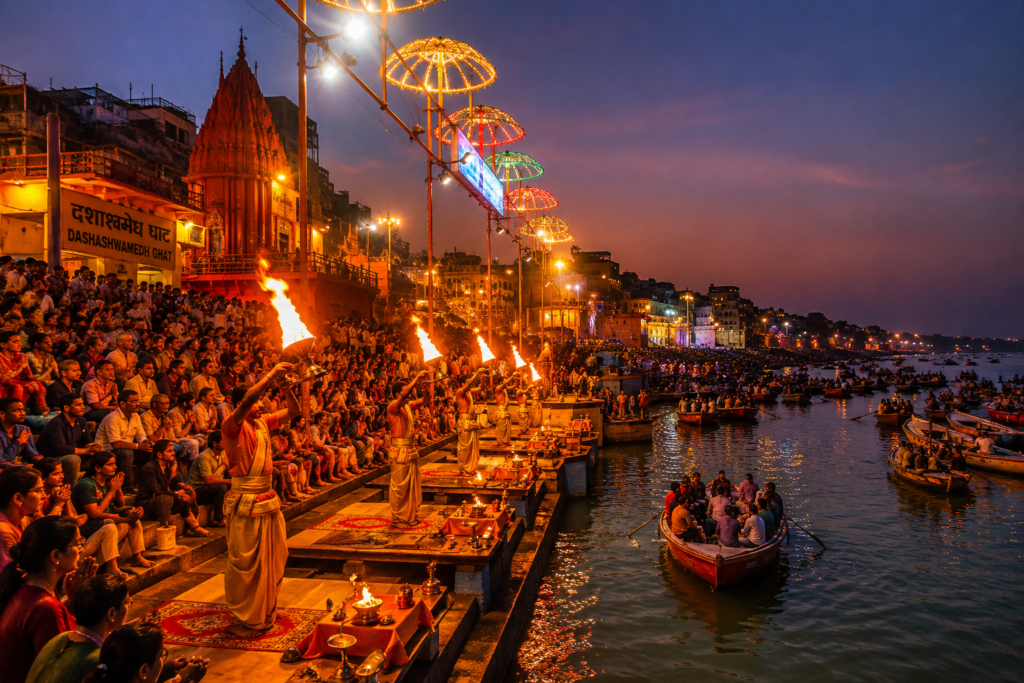
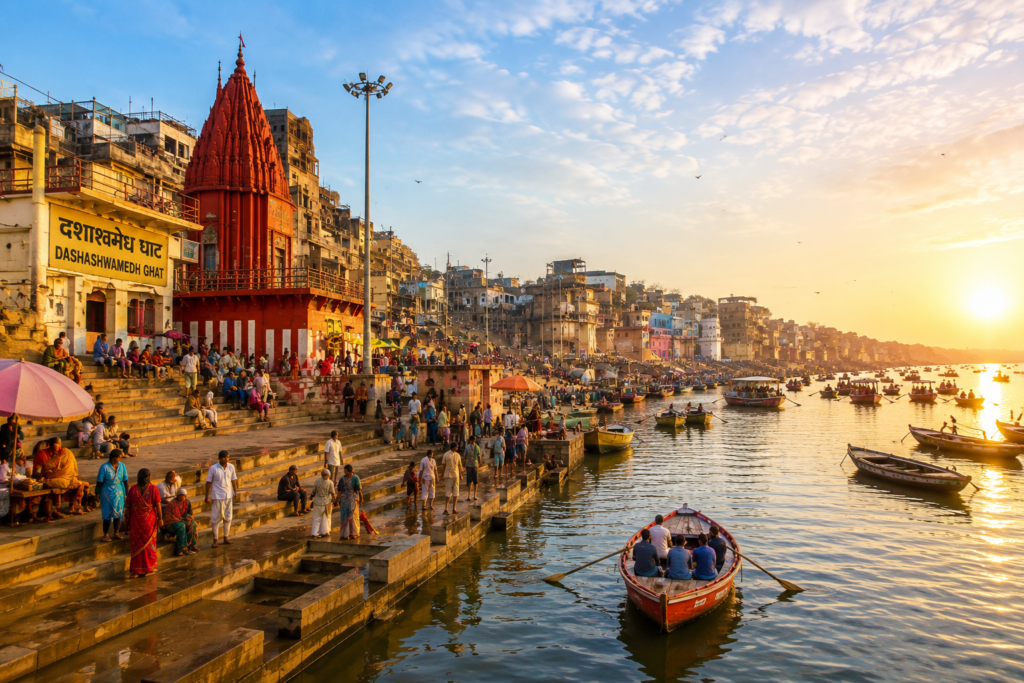
Dashashwamedh Ghat Varanasi is one of the most famous and sacred ghats on the banks of the holy River Ganga in Kashi. Known for its grand Ganga Aarti, spiritual atmosphere, and ancient history, this ghat attracts thousands of devotees and tourists every day. According to Hindu beliefs, Lord Brahma performed a sacred yajna here, making it one of the holiest places in Varanasi.
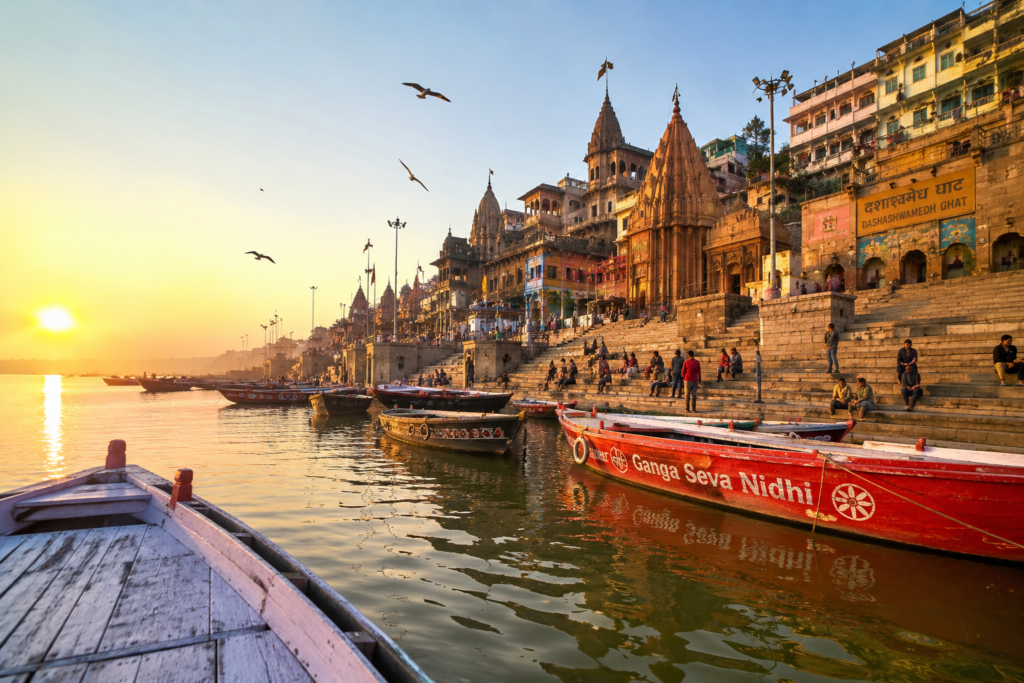
The evening Ganga Aarti at Dashashwamedh Ghat is the main attraction, where priests perform beautiful rituals with lamps, chants, and devotional music. The best time to visit is during sunrise and evening aarti for a divine experience. Visitors can also enjoy a peaceful boat ride on the Ganga and explore nearby temples and local markets. Seven Sands Tourism offers comfortable Varanasi tour packages from Bangalore with complete travel support for a smooth and memorable spiritual journey.
Introduction: Why Dashashwamedh Ghat Is the Soul of Varanasi
If Varanasi is the spiritual capital of India, then Dashashwamedh Ghat Varanasi is its beating heart. Situated on the western bank of the holy River Ganga, Dashashwamedh Ghat is the most visited, most photographed, and most spiritually charged ghat in all of Varanasi. Every evening, thousands of devotees, pilgrims, and travellers gather here to witness the legendary Ganga Aarti — a breathtaking ritual of fire, chanting, and devotion that has been performed without interruption for centuries.
Whether you are a first-time visitor or a seasoned pilgrim, this complete guide covers everything — history, Ganga Aarti timings, distances, visitor tips, and nearby attractions — to help you plan the perfect visit to Dashashwamedh Ghat in 2026.
History and Religious Significance of Dashashwamedh Ghat
What Does Dashashwamedh Mean?
The name Dashashwamedh comes from two Sanskrit words — Dasha (ten) and Ashwamedha (horse sacrifice). According to Hindu mythology, Lord Brahma performed ten Ashwamedha Yagnas (horse sacrifices) at this very spot to welcome Lord Shiva to Varanasi.
Another legend says that King Divodasa, ruler of Kashi (ancient Varanasi), performed the ten Ashwamedha sacrifices here to prove his devotion and capability to govern the sacred city.
Ancient Origins
Dashashwamedh Ghat is one of the oldest ghats in Varanasi. Historical records trace its current structure to 1748 AD, when Peshwa Balaji Baji Rao rebuilt and expanded it. However, its religious significance dates back thousands of years — mentioned in ancient Hindu scriptures including the Kashi Khand section of the Skanda Purana.
The ghat sits at the intersection of two sacred rivers — the physical River Ganga and the mythological underground River Saraswati — making it one of the most spiritually potent spots on earth.
Religious Importance
- Dashashwamedh Ghat is considered one of the Pancha Tirthas (five sacred pilgrimage spots) of Varanasi.
- Bathing at this ghat is believed to cleanse devotees of all sins and break the cycle of rebirth.
- It is directly associated with Lord Shiva and Lord Brahma, two of the three principal deities of Hindu religion.
- The ghat is located just minutes from Kashi Vishwanath Jyotirlinga — one of the 12 most sacred Shiva temples in India.
Dashashwamedh Ghat Ganga Aarti Timings 2026
The Ganga Aarti at Dashashwamedh Ghat is the most iconic spiritual event in Varanasi — and arguably in all of India. Performed every single day of the year without exception, it is a deeply moving experience that combines fire rituals, Sanskrit hymns, conch shells, and incense into one unforgettable ceremony.
Morning Aarti Timings
| Season | Morning Aarti Time |
|---|---|
| Summer (April–June) | 5:00 AM – 5:30 AM |
| Monsoon (July–September) | 5:30 AM – 6:00 AM |
| Winter (October–March) | 6:00 AM – 6:30 AM |
The morning aarti is smaller, quieter, and deeply meditative. It is ideal for those seeking a personal, intimate spiritual experience.
Evening Ganga Aarti Timings (Main Aarti)
| Season | Evening Aarti Time |
|---|---|
| Summer (April–June) | 7:00 PM – 8:00 PM |
| Monsoon (July–September) | 7:00 PM – 8:00 PM |
| Winter (October–March) | 6:00 PM – 7:00 PM |
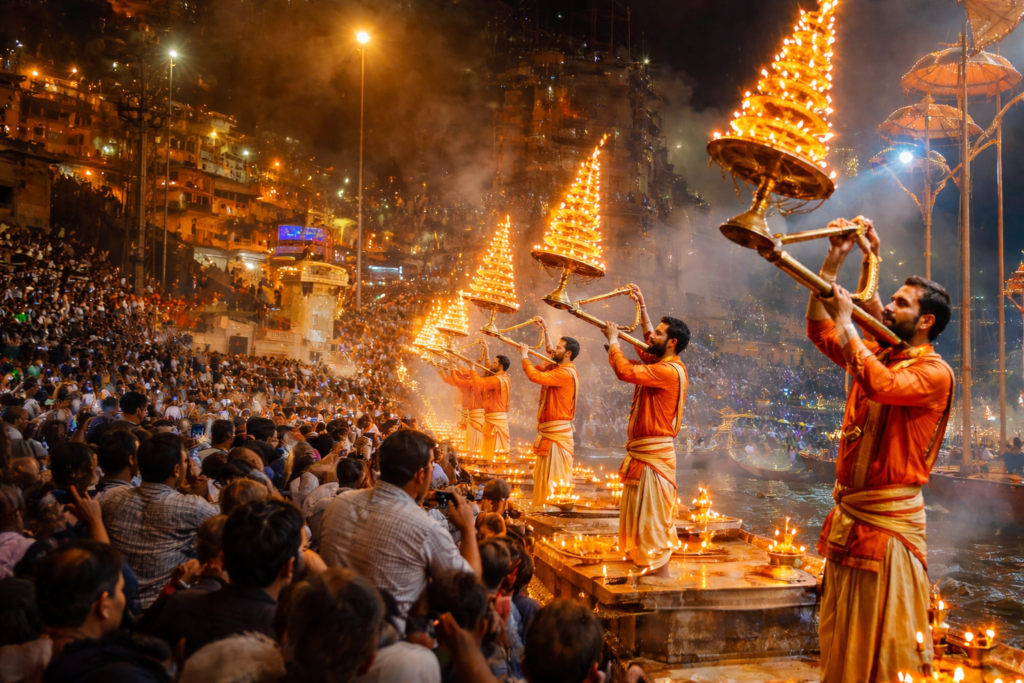
The evening Ganga Aarti is the main event. Seven priests simultaneously perform the ritual using large multi-tiered brass lamps (diyas), accompanied by bells, drums, and chanting. The entire ceremony lasts approximately 45 minutes to one hour.
Divine Kashi & Ayodhya Tour from Bangalore – 4 Days Spiritual Journey with Seven Sands Tourism India is a land…
Experience divine bliss with our Kashi Ayodhya Tour Package from Bangalore 4N/5D, designed by Seven Sands Tourism for devotees seeking…
What to Expect During the Ganga Aarti
- Seven priests dressed in traditional attire perform the aarti in perfect synchrony.
- The ceremony begins with the blowing of conch shells (Shankha Naad).
- Priests wave large fire lamps in circular motions as offerings to the River Ganga.
- The air fills with the scent of camphor, flowers, and incense.
- Thousands of floating diyas (earthen lamps) are released onto the river by devotees.
- The ceremony concludes with the distribution of holy water (teertha).
Pro Tip: Arrive at least 30–45 minutes early to secure a good viewing spot on the steps or hire a boat for the best view from the river.
Dashashwamedh Ghat to Kashi Vishwanath Temple Distance
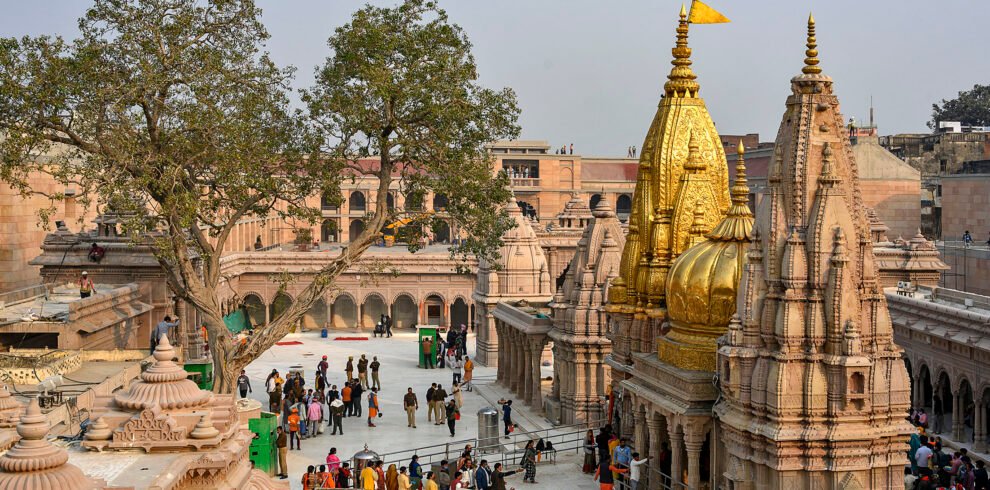
Dashashwamedh Ghat to Kashi Vishwanath Temple distance is approximately 550 metres — roughly a 7 to 10-minute walk through the narrow lanes (galis) of the old city.
How to Reach Kashi Vishwanath from Dashashwamedh Ghat
Route 1 — Via Vishwanath Gali (Most Popular)
- Exit Dashashwamedh Ghat and walk straight into Vishwanath Gali.
- The lane leads directly to the Kashi Vishwanath Corridor entrance.
- Distance: 550 m | Time: 7–10 minutes on foot.
Route 2 — Via Kashi Vishwanath Corridor (Post-2021)
- After the 2021 expansion, a wide pedestrian corridor connects the ghat area directly to the temple complex.
- This route is accessible, well-lit, and recommended for senior citizens and families.
Note: No vehicles are permitted in the lanes leading to Kashi Vishwanath Temple. The walk is entirely on foot through the old city lanes.
Assi Ghat to Dashashwamedh Ghat Distance
Assi Ghat to Dashashwamedh Ghat distance is approximately 3.5 kilometres by road, or about 2 kilometres by boat along the River Ganga.
How to Travel from Assi Ghat to Dashashwamedh Ghat
By Boat (Recommended)
- Hire a wooden rowing boat or a motorboat from Assi Ghat.
- The boat ride takes 30–45 minutes by rowing boat, or 15–20 minutes by motorboat.
- Cost: ₹200–₹500 per boat (negotiate before boarding).
- This is the most scenic and spiritually enriching way to travel between the two ghats.
By Auto-Rickshaw / E-Rickshaw
- Take Lanka Road → Godaulia Chowk → Dashashwamedh Ghat Road.
- Distance: 3.5 km | Time: 15–25 minutes (traffic dependent).
- Cost: ₹50–₹80 by shared e-rickshaw, ₹100–₹150 by auto.
On Foot Along the Ghats
- Walking along the ghats from Assi to Dashashwamedh passes through 20+ ghats including Tulsi Ghat, Kedar Ghat, Harishchandra Ghat, and Manikarnika Ghat.
- Distance: approximately 2 km | Time: 40–60 minutes.
- This is the best way to experience the true spirit of Varanasi’s riverfront.
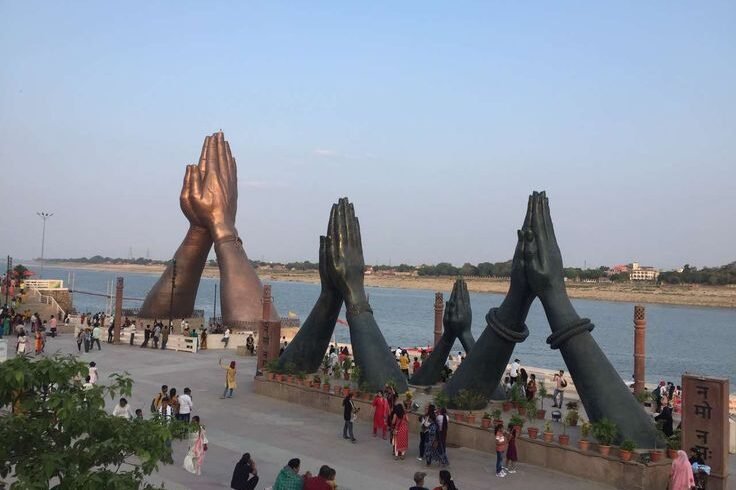
Namo Ghat to Dashashwamedh Ghat Distance
Namo Ghat to Dashashwamedh Ghat distance is approximately 4 kilometres by road, or 2.5 kilometres by boat on the River Ganga.
Namo Ghat (also called Khidkiya Ghat) is located in the northern part of the Varanasi riverfront. It was renamed and redeveloped in 2019 and is known for its large open amphitheatre and modern infrastructure.
How to Travel from Namo Ghat to Dashashwamedh Ghat
By Boat
- Hire a boat directly from Namo Ghat jetty.
- Travel southward along the riverfront, passing Raj Ghat, Panchganga Ghat, and Manikarnika Ghat.
- Time: 45–60 minutes by rowing boat, 20–30 minutes by motorboat.
By Road
- Take the riverside road south toward Godaulia.
- Distance: 4 km | Time: 20–30 minutes by auto.
- Cost: ₹80–₹120 by auto-rickshaw.
Best Time to Visit Dashashwamedh Ghat Varanasi
Season-wise Guide
October to March — Best Time
- Cool, pleasant weather (15°C–28°C).
- Clear skies make the Ganga Aarti visually stunning.
- Major festivals: Dev Deepawali (November), Ganga Mahotsav, Maha Shivaratri (Feb–March).
- Most recommended for first-time visitors.
April to June — Warm but Manageable
- Temperatures rise to 35°C–45°C.
- Early morning visits (5–8 AM) are highly recommended.
- Fewer tourists means a more personal experience.
July to September — Monsoon
- Humidity and rain are high.
- The River Ganga rises significantly — stunning visually but boats may be restricted.
- Fewer tourists, more peaceful ambience.
Best Time of Day
- Early Morning (5–7 AM): Sunrise over the Ganga, morning prayers, and rowing boats on the river — magical and peaceful.
- Evening (5–8 PM): The grand Ganga Aarti — most popular time, crowded but unforgettable.
How to Reach Dashashwamedh Ghat Varanasi
By Air
- Lal Bahadur Shastri International Airport, Varanasi is 26 km from the ghat.
- Cab or prepaid taxi: ₹400–₹600 | Time: 45–60 minutes.
By Train
- Varanasi Junction (BSB) is the main railway station — 6 km from the ghat.
- Auto-rickshaw or e-rickshaw to Godaulia Chowk, then walk to the ghat.
- Time: 20–30 minutes | Cost: ₹60–₹100.
By Road
- Varanasi is well connected by national highways from Delhi (820 km), Lucknow (286 km), Prayagraj (120 km), and Patna (247 km).
- UPSRTC buses, private buses, and taxis are all available.
Local Transport to the Ghat
- The nearest vehicle drop point is Godaulia Chowk — approximately 500 m from the ghat.
- From Godaulia, walk through the lanes toward the river.
- No private vehicles are allowed beyond Godaulia for the ghat area.
Nearby Attractions at Dashashwamedh Ghat
- Kashi Vishwanath Temple — 550 m, one of the 12 Jyotirlingas of India.
- Manikarnika Ghat — 1.2 km north, the most sacred cremation ghat in Hinduism.
- Sarnath — 13 km, where Lord Buddha gave his first sermon; UNESCO World Heritage Site.
- Tulsi Manas Temple — 2.5 km, dedicated to Lord Ram, built where Tulsidas wrote Ramcharitmanas.
- Ramnagar Fort — 14 km, a 17th-century fort and museum on the opposite bank of the Ganga.
- Banaras Hindu University (BHU) — 5 km, home to the stunning Vishwanath Temple inside its campus.
- Gyanvapi Mosque — adjacent to Kashi Vishwanath Temple, an important historical site.
Practical Visitor Tips for Dashashwamedh Ghat
- Footwear: Remove shoes before descending the ghat steps. Shoe-keeping stalls are available nearby for ₹5–₹10.
- Photography: Photography of the Ganga Aarti is permitted from the steps and from boats. Avoid flash during the ceremony out of respect.
- Boat Rides: Always negotiate the fare before boarding. Fixed-rate government boats are available at the official jetty.
- Dress Code: Traditional Indian attire is recommended. Avoid sleeveless or very short clothing near the ghat area.
- Safety: Beware of touts near the ghat. Do not accept free garlands or tilak from strangers — they will demand payment.
- Valuables: Keep bags secure and avoid flashing expensive electronics in crowded areas.
- Prasad: Freshly made peda and malaiyo (seasonal sweet) are available in the lanes near the ghat — must try.
- Crowd Management: For Ganga Aarti, reaching 45 minutes early guarantees a front-row spot on the steps.
Table of Contents
Plan Your Varanasi Pilgrimage with Seven Sands Tourism
Dashashwamedh Ghat Varanasi is not just a destination — it is a transformative spiritual experience that stays with you for a lifetime. But to truly absorb the magic of Varanasi, you need the right guidance, the right timing, and the right support.
Seven Sands Tourism offers expertly crafted Varanasi pilgrimage packages that cover:
- VIP Ganga Aarti viewing arrangements at Dashashwamedh Ghat
- Sunrise boat rides on the River Ganga
- Special darshan at Kashi Vishwanath Jyotirlinga
- Guided heritage walks through the ancient lanes of Varanasi
- Accommodation near the ghats — from budget to luxury
- Day trips to Sarnath, Ramnagar Fort, and nearby temples
Package Highlights:
| Package | Duration | Starting Price |
|---|---|---|
| Varanasi Weekend Getaway | 2 nights / 3 days | ₹30,500 per person |
| Kashi Darshan Package | 3 nights / 4 days | ₹33,500 per person |
| Varanasi + Prayagraj Combo | 4 nights / 5 days | ₹39,500 per person |
| Varanasi + Kedarnath Yatra | Customize | Ask on call |
All packages include accommodation, meals, transport, guide, and puja arrangements.
Book your Varanasi pilgrimage with Seven Sands Tourism today and experience the divine city of Kashi like never before.
📞 Contact Seven Sands Tourism for custom group packages and early-bird discounts.
Frequently Asked Questions (FAQs)
What is the significance of Dashashwamedh Ghat in Varanasi?
Dashashwamedh Ghat is the most sacred and central ghat in Varanasi. According to Hindu mythology, Lord Brahma performed ten Ashwamedha Yagnas here to welcome Lord Shiva. It is one of the Pancha Tirthas of Kashi and bathing here is believed to cleanse all sins. It is also the site of the famous daily Ganga Aarti.
What time is the Ganga Aarti at Dashashwamedh Ghat?
The evening Ganga Aarti at Dashashwamedh Ghat takes place daily between 6:00 PM and 7:00 PM in winter and 7:00 PM to 8:00 PM in summer. The morning aarti begins between 5:00 AM and 6:30 AM depending on the season. The evening aarti is the main, grand ceremony performed by seven priests simultaneously.
How far is Dashashwamedh Ghat from Kashi Vishwanath Temple?
Dashashwamedh Ghat to Kashi Vishwanath Temple is approximately 550 metres — a 7 to 10-minute walk through the lanes of the old city. After the 2021 Kashi Vishwanath Corridor development, a wide and accessible pedestrian path connects the ghat directly to the temple complex.
What is the distance from Assi Ghat to Dashashwamedh Ghat?
Assi Ghat to Dashashwamedh Ghat is approximately 3.5 km by road and 2 km by boat on the River Ganga. The boat route is the most popular option — it passes through more than 15 ghats and takes 30 to 45 minutes by rowing boat. The road route via Godaulia takes 15 to 25 minutes by auto-rickshaw.
How far is Namo Ghat from Dashashwamedh Ghat?
Namo Ghat to Dashashwamedh Ghat is approximately 4 km by road and 2.5 km by river boat. By road, the journey takes 20 to 30 minutes by auto-rickshaw. By boat, travelling south along the riverfront takes 45 to 60 minutes by rowing boat or 20 to 30 minutes by motorboat.
Is it better to watch the Ganga Aarti from the ghat steps or from a boat?
Both offer different experiences. Watching from the ghat steps puts you close to the priests and gives you the full sensory experience of sound, fire, and fragrance. Watching from a boat gives you a panoramic view of the entire ghat lit up with fire lamps and is better for photography. For first-time visitors, the ghat steps are recommended. For photographers and groups, a boat is ideal.
What is the best month to visit Dashashwamedh Ghat in 2026?
The best months to visit Dashashwamedh Ghat in 2026 are October, November, February, and March. October and November offer the Dev Deepawali festival when the entire riverfront is illuminated with thousands of diyas. February and March coincide with Maha Shivaratri, the most important festival for devotees of Lord Shiva.
Are there any rules or restrictions at Dashashwamedh Ghat?
Dashashwamedh Ghat has a few important guidelines. Leather items like belts and bags should be avoided near the main puja area. Do not wade into the river during high-water monsoon months. Photography inside the main aarti area may be restricted during peak festival times. Maintain silence and respect during the aarti ceremony. Do not litter on the ghat steps or in the river.