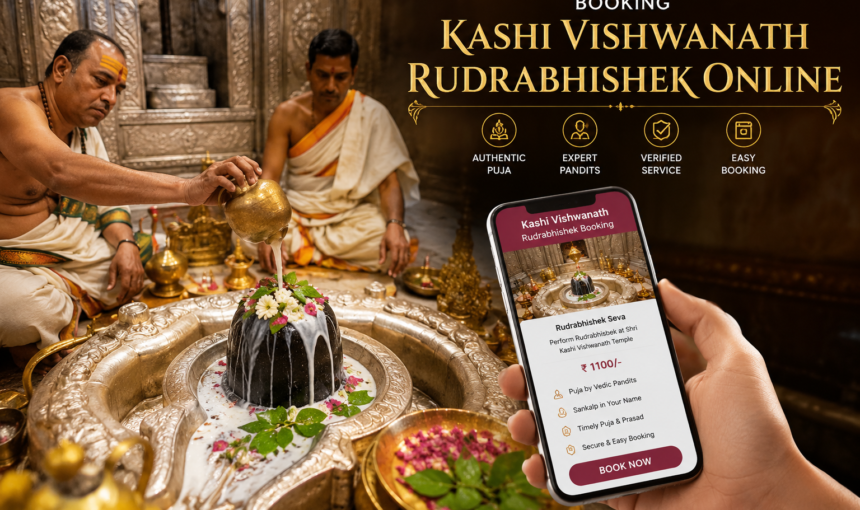
Planning a spiritual journey from the bustling hubs of Bangalore to the ancient, sacred lanes of Varanasi (Kashi) is a deeply profound milestone for any family. At the heart of this pilgrimage lies the desire to perform the Kashi Vishwanath Rudrabhishek Pooja—a powerful Vedic ritual dedicated to Lord Shiva, designed to cleanse past karmas and bring immense peace, health, and prosperity to your household.
However, many devotees face immense frustration when trying to book this intense, multi-hour ceremony. The official temple booking portal lists several tiers of Rudrabhishek Pooja types (specifically 1 Shastri, 5 Shastris, and 11 Shastris), yet it fails to explain the practical differences. What do these options mean? How long do they take? What exact Pooja Samagri (ritual materials) do you need to bring?
This comprehensive, field-tested guide breaks down every practical detail, moving beyond generic travel advice to provide precise, actionable logistics. As an elite travel operator specializing in seamless, end-to-end spiritual pilgrimages, Seven Sands Tourism has curated this manual to ensure your family’s focus remains entirely on the divine, free from administrative stress or chaotic queues.
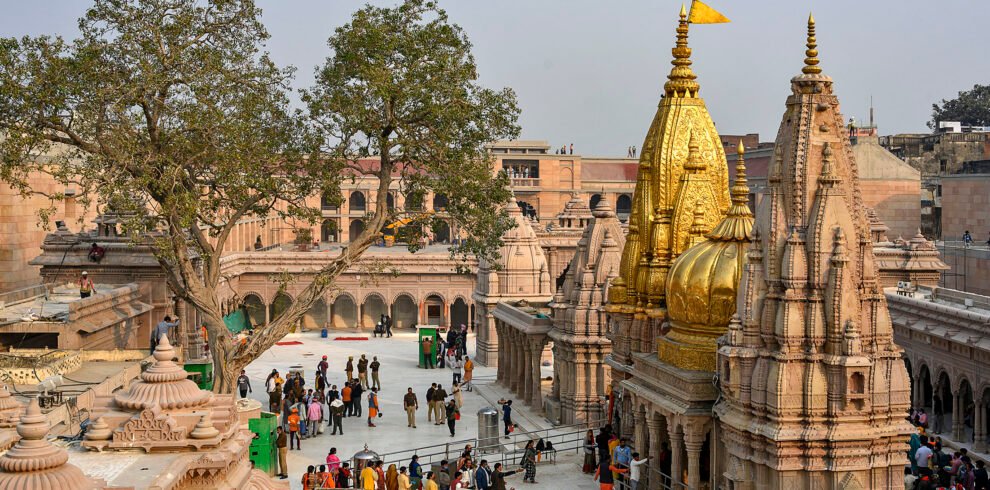
Experience divine bliss with our Kashi Ayodhya Tour Package from Bangalore 4N/5D, designed by Seven Sands Tourism for devotees seeking…
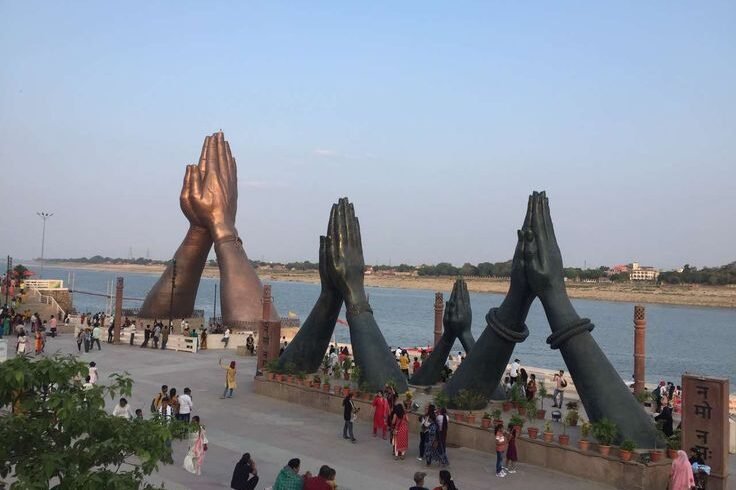
Divine Kashi & Ayodhya Tour from Bangalore – 4 Days Spiritual Journey with Seven Sands Tourism India is a land…
What is the Online Kashi Vishwanath Rudrabhishek Pooja Booking Process?
How to Book Kashi Vishwanath Rudrabhishek Pooja Online
To book the Kashi Vishwanath Rudrabhishek online, visit the official Shri Kashi Vishwanath Temple Trust website, navigate to the ‘Services’ or ‘Pooja Booking’ section, select your preferred Rudrabhishek tier (1, 5, or 11 Shastris), choose an available date and time slot, enter your family’s gotra and detail parameters, and complete the secure online payment to download your official e-ticket.
What Do the Different Shastri Tiers Mean for Rudrabhishek?
The most common point of confusion for families looking at the official booking engine is decoding the “Shastri” tiers. In Vedic traditions, a Shastri is a highly trained scholar and priest who has mastered the nuances of the Shri Rudram—the sacred hymns from the Yajurveda dedicated to Lord Shiva.
The number of Shastris you book directly determines the intensity, resonance, speed, and overall spiritual atmosphere of the ritual inside the temple complex.
1 Shastri Rudrabhishek Pooja
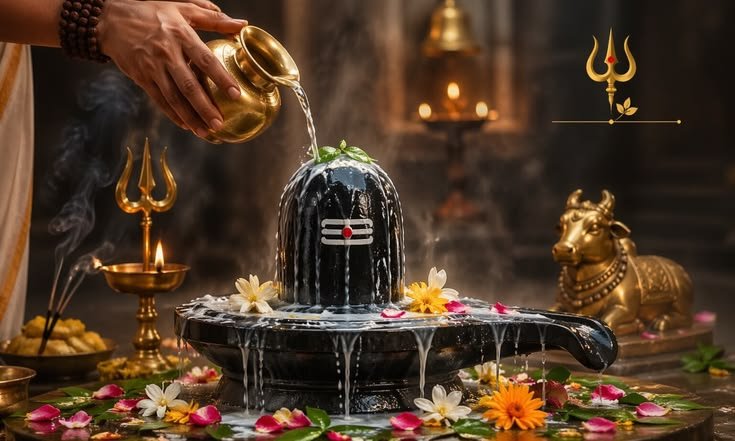
- The Structure: A single priest conducts the entire ritual. He leads the family through the initial Sankalpam (formal declaration of intent), prepares the liquid offerings, and chants the necessary Vedic verses solo.
- Best Suited For: Couples or very small families who prefer a quiet, intimate, and deeply meditative ceremony.
- The Experience: Because a single voice carries the entire weight of the chanting, it moves at a steady, rhythmic pace. It is deeply personal, though it lacks the acoustic resonance of multiple voices chanting in unison.
5 Shastris Rudrabhishek Pooja
- The Structure: Five priests sit with your family. One chief priest guides your family through the physical rituals (pouring the offerings), while the remaining four priests chant the Vedic hymns simultaneously in perfect harmonic unison.
- Best Suited For: Medium-sized families or those performing the ceremony for a specific, intense purpose (like a major life milestone or overcoming an illness).
- The Experience: The energetic shift is palpable. The simultaneous chanting of five trained scholars creates a powerful acoustic vibration that easily cuts through the ambient sounds of the bustling temple complex, wrapping your family in a protective envelope of sound.
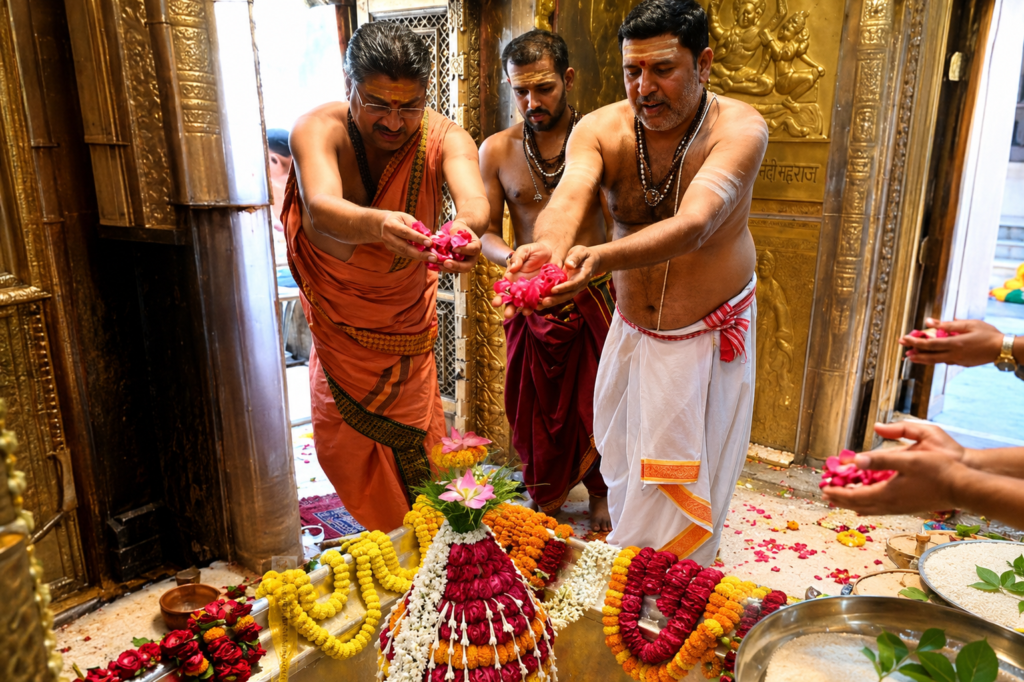
11 Shastris Rudrabhishek Pooja (The Ultimate Vedic Ritual)
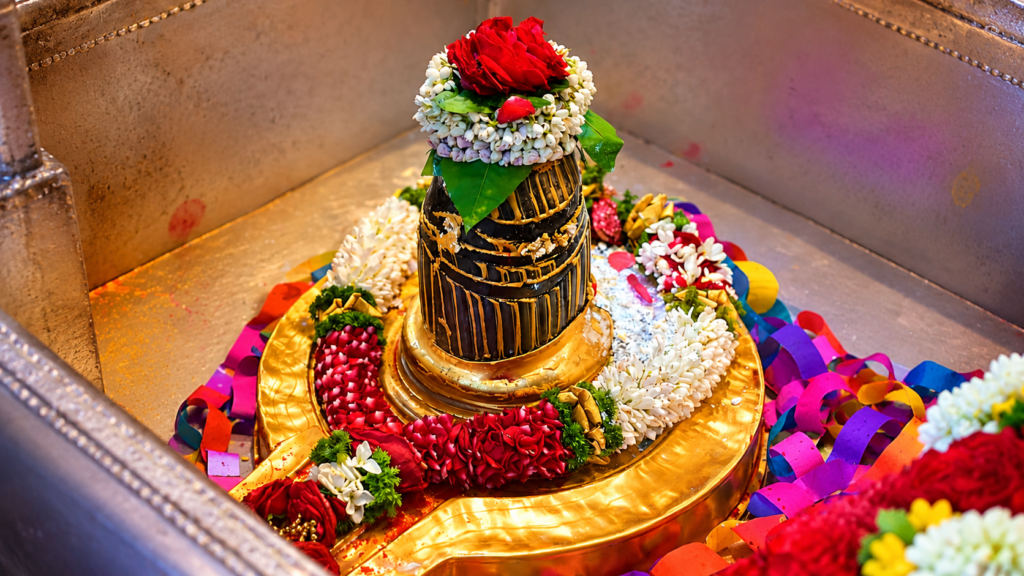
- The Structure: Eleven highly qualified Shastris surround your family. This layout represents the eleven forms of Rudra (the Ekadasa Rudras).
- Best Suited For: Large joint families, or individuals undertaking a rare, once-in-a-lifetime spiritual invocation for generations of ancestral blessings and intense planetary rectifications.
- The Experience: This is an incredibly intense, awe-inspiring sensory and spiritual event. The collective vocal resonance of eleven priests creates a powerful energetic field. The energy generated is immense, making it the premier choice for families looking for the absolute peak of Vedic ritualism in Kashi.
How Do the Tiers Compare in Time, Cost, and Impact?
To help your family make an informed decision based on your schedule, budget, and physical stamina, Seven Sands Tourism has compiled this straightforward comparison matrix based on current operational realities within the temple corridors.
| Attribute | 1 Shastri Tier | 5 Shastris Tier | 11 Shastris Tier |
| Chanting Intensity | Solo / Meditative | Synchronized / Vibrational | Mass Vedic Choir / Highly Intense |
| Average Duration | 1 to 1.5 Hours | 2 to 2.5 Hours | 3.5 to 4 Hours |
| Ideal Group Size | 1 to 2 People | 3 to 5 People | 6+ People (Full Family) |
| Physical Stamina Required | Moderate (Sitting cross-legged) | High (Extended sitting) | Very High (Requires preparation) |
| Spiritual Focus | Personal Peace & Clarity | Family Wellbeing & Success | Complete Ancestral & Planetary Remediation |
What is the Exact Step-by-Step Pooja Samagri List Required?
When you book directly on the government portal, you are paying for the priests’ services and access to the sacred space. The temple does not provide the extensive list of ingredients required to execute a traditional, multi-hour Rudrabhishek.
Arriving without these materials or buying low-quality items from aggressive street vendors outside the gates can disrupt your ceremony. Below is the precise checklist of premium Pooja Samagri that Seven Sands Tourism coordinates and prepares freshly for our Bangalore clients before they step into the temple.
The Panchamrut (The Five Core Liquids)
- Desi Cow Milk: Minimum 2 to 5 liters (must be fresh, unboiled, and sourced from indigenous cows).
- Fresh Curd (Yogurt): 1 kg (thick, freshly set, and not sour).
- Pure Honey: 250 grams (preferably organic, unprocessed forest honey).
- Misri or Liquid Jaggery: 200 grams (used to sweeten the offerings).
- Pure Cow Ghee: 500 grams (used both for the bathing ritual and the lighting of the primary lamps).
Sacred Solids and Herbs
- Bael Patra (Bilva Leaves): Exactly 108 or 1008 leaves. They must be completely intact, three-lobed, and entirely free from tears or insect holes.
- Shami Patra: A small bundle of these highly auspicious leaves, specifically beloved by Lord Shiva.
- Dhatura Flowers and Fruits: 5 to 11 pieces. These spiky green fruits and white trumpet flowers are essential for classical Rudra worship.
- Sandalwood Paste (Ashtagandha or Pure Chandan): 50 grams of smooth, aromatic paste for marking the Lingam.
- Bhasma (Sacred Ash): Sourced directly from authentic dhunis (sacred fires) or the temple authorized counters.
Sovereigns and Supporting Accoutrements
- Janeu (Sacred Threads): 2 to 5 pairs (offered to the deities and worn by the male family members during the ceremony).
- Moli (Kalava): Red and yellow cotton rolls for tying around wrists and ritual pots.
- Aromatic Waters: Premium Rose Water (Gulab Jal) and Kewra water for the final cleansing cycles.
- Fresh Fruits and Sweets: A minimum of 5 varieties of seasonal fruits alongside fresh Peda or Ladoo for the final Bhog (food offering).
A Note on Local Sourcing: If you attempt to purchase these items independently in the chaotic markets surrounding Dashashwamedh Ghat on the morning of your pooja, you run a high risk of overpaying for wilted leaves or adulterated liquids. When traveling with an organized group or custom itinerary from Seven Sands Tourism, our local Kashi representatives source these materials from multi-generational vendors at dawn, ensuring immaculate purity.
What Are the Operational Steps on the Day of the Pooja?
Performing a long ritual in one of India’s most visited temples requires strict adherence to local rules and physical discipline. To avoid common logistical errors, follow this chronological workflow:
Step 1: Pre-Ritual Purification
Devotees must take a full head bath before entering the temple. While older traditions dictated a dip in the Holy Ganga at the nearby ghats, families traveling with children or elderly parents often prefer a hot shower at their hotel. Put on clean, traditional attire.
- Men: Dhoti-Kurta or clean Kurta-Pyjama.
- Women: Sarees or traditional Salwar Kameez. Avoid black or dark leather garments entirely.
Step 2: Passing Through Security and Verification
Arrive at the designated temple entry gate (usually Gate No. 4 or the Corridor entrance, depending on your ticket type) at least 45 minutes before your scheduled slot. You must present your printed online booking e-ticket along with the original Aadhaar cards or passports matching the names registered online.
Important Mobile Policy: Mobile phones, smartwatches, wallets with coins, and leather belts are strictly prohibited inside the main inner sanctum. Leave them in your hotel room or secure them in the locker facilities managed by Seven Sands Tourism staff at our lounge near the gate.
Step 3: Entering the Designated Abhishek Zone
Once cleared by security, temple guides will escort your family to the specific platform or corridor area assigned for online bookings. Your assigned Shastris will already be seated there, surrounded by the pre-cleansed Samagri.
Step 4: The Sankalpam (The Crucial Step for Families)
Before a single drop of milk is poured, the chief Shastri will ask the head of the family to hold water, flowers, and rice in their right palm. He will then ask you to recite your family lineage (Gotra), your birth stars (Nakshatras), and the names of your family members back in Bangalore. This is the Sankalpam—the cosmic dedication of the ritual’s fruits to your specific family.
Step 5: The Chanting and Continuous Abhishek
As the Shastris begin their recitation of the Shri Rudram, your family will take turns continuously pouring the liquids over the Shiva Lingam using copper or brass vessels. The pace must be slow and steady, matching the rhythm of the mantras. Prepare for your legs to cramp slightly if you are not used to sitting on the floor; however, low wooden stools (Patas) can be requested for elderly family members.
Step 6: The Final Aarti and Distribution of Prasad
After the final wash with pure water and decoration with Bael leaves and flowers, the priests will perform a vibrant closing Aarti. You will receive the energized Prasad, a portion of the sacred cloth offered to the deity, and the deep blessings of the Shastris.
Why Is the Bangalore to Varanasi Spiritual Corridor Unique?
For our client base originating from areas like Jayanagar, Indiranagar, Whitefield, or Malleshwaram, traveling to Kashi represents a profound cultural shift. The transition from Bangalore’s highly structured, orderly environment to the raw, ancient, and highly energetic chaos of Varanasi can feel overwhelming.
- Climate Variations: Varanasi fluctuates between intense, dry summer heat and biting winter cold. Bangaloreans used to a moderate, temperate climate need to plan their clothing and hydration levels carefully, particularly when spending 4 hours sitting inside a humid temple environment.
- Language Alignment: Many families worry about communication barriers. While the Shastris in Varanasi speak chaste Hindi and Sanskrit, the local team at Seven Sands Tourism bridges this gap seamlessly by providing bilingual coordinates who understand South Indian customs, ensuring your specific Gotra and regional traditions are fully respected during the Sankalpam.
Book Your Hassle-Free Kashi Pilgrimage with Seven Sands Tourism
Navigating online portal glitches, managing local vendors, and dealing with temple crowds should not crowd out the profound spiritual resonance of your pilgrimage.
At Seven Sands Tourism, we specialize in transforming complex, intense spiritual journeys into seamless, profoundly moving experiences for families. Our comprehensive Bangalore-to-Varanasi customized packages handle every detail with absolute precision:
- Guaranteed Ritual Bookings: We handle the official temple trust online booking systems directly, securing your preferred Shastri tier months in advance.
- Premium, Verified Samagri: No stress over sourcing items. We supply pristine, unadulterated liquids and perfectly harvested ritual herbs.
- End-to-End Logistics: Direct flights from Bangalore (BLR) to Varanasi (VNS), luxury air-conditioned hotel stays near the temple corridor, private VIP entry coordination, and clean, reliable ground transportation.
- Local Expert Guides: Dedicated spiritual concierges who guide you through the crowds, explain the historical context of the rituals, and protect your family from local tourist traps.
Let your family focus entirely on the transformative power of Lord Shiva’s blessings while we handle the earthly details.
Start Planning Your Sacred Journey Today
Connect with our dedicated spiritual travel desk at Seven Sands Tourism. Let us build a flawless, custom-tailored Kashi Vishwanath Rudrabhishek Pooja itinerary for your family.
[Click Here to Consult with Our Kashi Travel Experts at Seven Sands Tourism]
Table of Contents
Frequently Asked Questions (FAQs)
Can we perform the online-booked Rudrabhishek inside the main inner sanctum (Garbhagriha), or is it held in the outer corridor?
The online ticket for the 1, 5, or 11 Shastri tiers usually assigns your family a specific designated space inside the newly built Kashi Vishwanath Corridor extension platforms or the Yajna Shala, rather than directly inside the crowded, tiny Garbhagriha (inner sanctum). While you will be performing the ritual on an energized, consecrated alternative Shivalingam or custom setup provided by the temple trust, your family will still get a separate queue line for a direct, close-up Darshan of the primary Jyotirlingam immediately after your ritual concludes.
What happens if our flight from Bangalore (BLR) is delayed and we miss our exact online booking time slot?
The Shri Kashi Vishwanath Temple Trust enforces strict time slots, and tickets are officially non-refundable and non-transferable. If a flight delay causes you to miss your slot, the online ticket becomes invalid for that day. However, if you have booked your pilgrimage package through an agency like Seven Sands Tourism, our local on-ground representatives can immediately step in to coordinate with local temple authorities or arrange an authorized offline backup slot to ensure your family’s ritual is performed without cancellation panic.
My parents cannot sit cross-legged on the stone floor for a 3-hour 11-Shastri Pooja. Are chairs or stools permitted?
Sitting directly on the floor is the traditional requirement for Vedic rituals. However, for senior citizens or individuals with severe knee or back issues, the temple helpers can provide a low wooden stool (called a Patla) upon request before the ceremony begins. Bringing outside plastic chairs or folding stools into the ritual area is strictly prohibited due to tight security and space constraints.
Can women who are traveling alone or with their daughters perform the Rudrabhishek rituals independently?
Yes, absolutely. Lord Shiva welcomes all devotees equally. Women can independently book, sit for, and physically perform the entire continuous liquid Abhishek and Sankalpam processes. There is no Vedic restriction preventing a woman from leading the family ritual in Kashi. The only prerequisite is wearing traditional, clean ethnic attire (Saree or Salwar suit) and maintaining standard ritual purity guidelines.
Is there a safe, authorized place near Gate 4 to store expensive smartphones, smartwatches, and leather items?
While there are chaotic, unofficial shoe-keeping shops and local flower vendors offering free locker boxes outside the alleys, using them puts your expensive devices at risk. The temple administration provides limited official locker counters, but lines are incredibly long. For peace of mind, Seven Sands Tourism maintains a private, secure holding lounge near the main corridor entrance where our clients can securely lock away all digital assets and leather goods before stepping up to the security metal detectors.
We want to bring authentic sacred Ganga Jal from Dashashwamedh Ghat for our Pooja. Can we bring it inside an open container?
Security personnel will absolutely not allow unsealed, loose liquids or open plastic bottles carried from the outside world into the inner temple cordons to prevent any security or contamination risks. If you wish to use holy Ganga water for your Abhishek, it must either be purchased inside the official temple trust counters in sealed brass/copper containers, or you can rely on our team to provide pre-verified, temple-approved sealed holy water along with your Samagri kit.
If our child or an elderly family member needs an emergency restroom break during a 4-hour ceremony, can they re-enter?
This is one of the toughest challenges of the longer Shastri tiers. Once you clear the multi-layered security gates and enter the inner ritual zone, leaving to use a restroom means you will have to exit the entire secure perimeter completely. Re-entering requires standing in the primary security line all over again, which can take an hour or more, effectively causing them to miss the rest of the Pooja. It is highly recommended to strictly limit fluid intake for 2 hours prior to the slot time.
Does the online booking price include the traditional Dakshina (monetary offering) for the Shastris, or do we pay extra?
The online booking fee paid to the official government temple trust portal covers the administrative charges and basic priestly allocation, which goes directly to the temple trust funds. It does not include the personal Dakshina for the individual Shastris who spend hours chanting for your family. Culturally and traditionally, it is highly customary to offer a voluntary, respectful cash Dakshina directly to the priests at the end of the Aarti to secure their personal blessings.