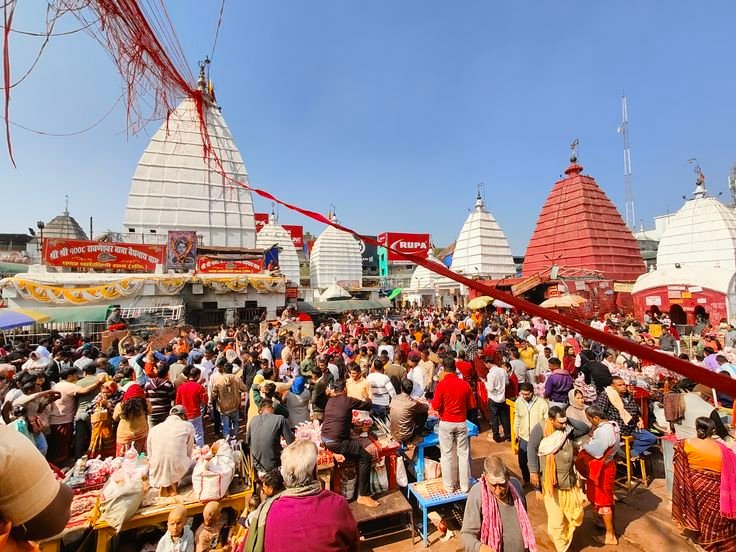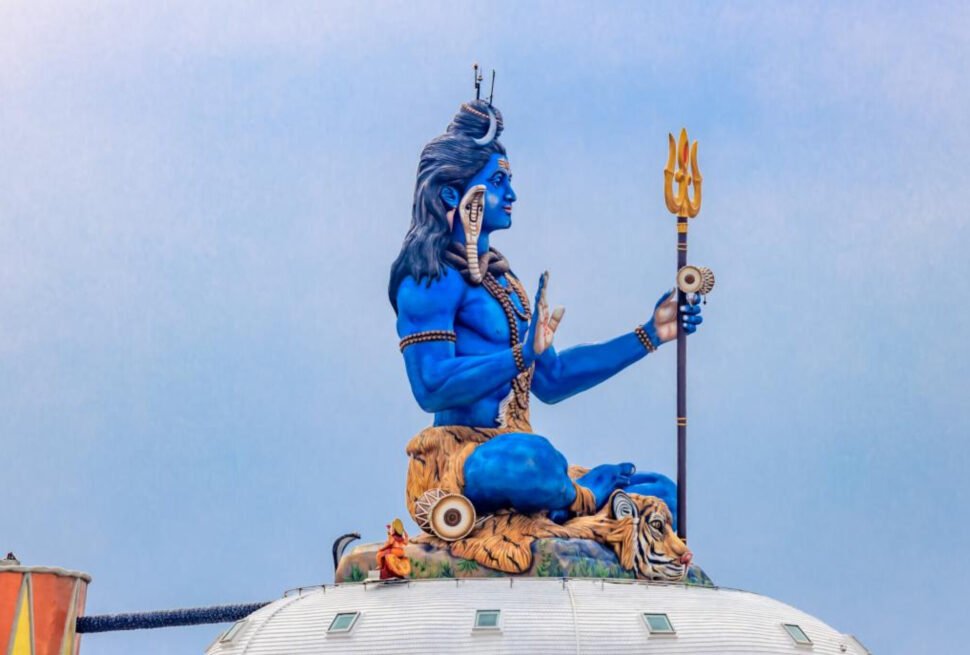
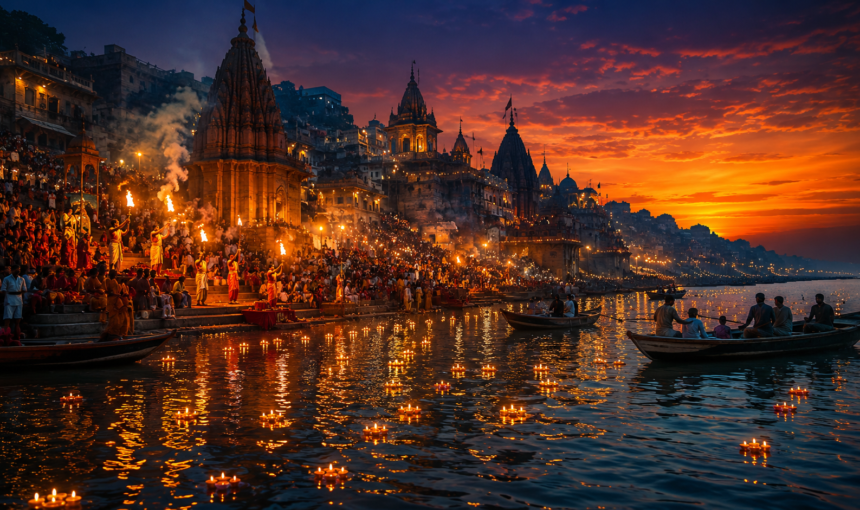
Varanasi is not just a city — it is the soul of India. Known as Kashi, Banaras, and the City of Lord Shiva, Varanasi is home to some of the most sacred temples in the world that have been drawing pilgrims, saints, and spiritual seekers for thousands of years. The sacred temples of Varanasi are not simply places of worship — they are living centers of faith, devotion, healing, and divine energy that touch every visitor deeply.
From the ancient Bindu Madhav Temple and the mystical Manikarnika Mandir to the architecturally stunning Nepali Temple Varanasi and the spiritually powerful Kali Temple Varanasi — every temple in Kashi carries a story, a blessing, and a divine presence that is impossible to describe in words. At Seven Sands Tourism, we help families, senior citizens, and devoted pilgrims from Bangalore experience the complete spiritual richness of a Kashi tour with comfort, care, and deep reverence.
Complete Sacred Temples of Varanasi – Guide by Seven Sands Tourism
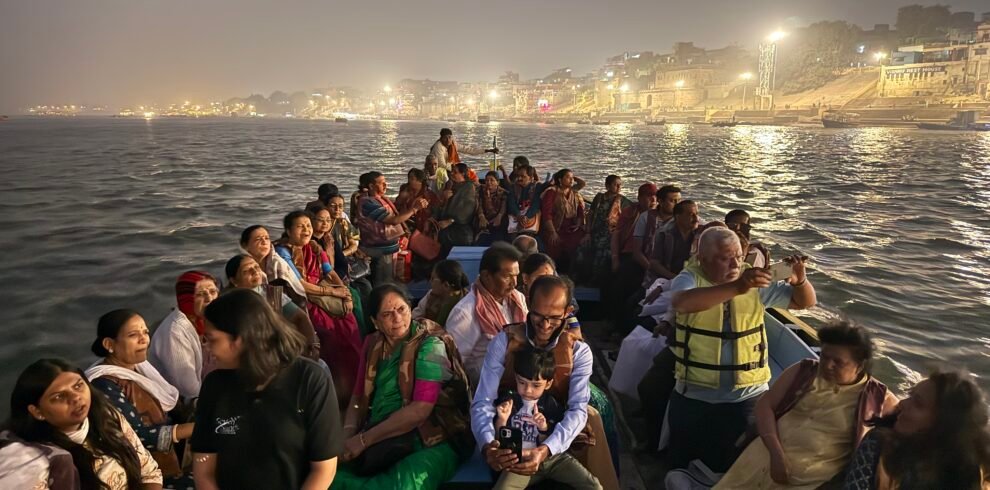
Embark on a soulful journey with our Ayodhya Varanasi flight tour package from Bangalore 3 Nights 4 Days from Bangalore,…
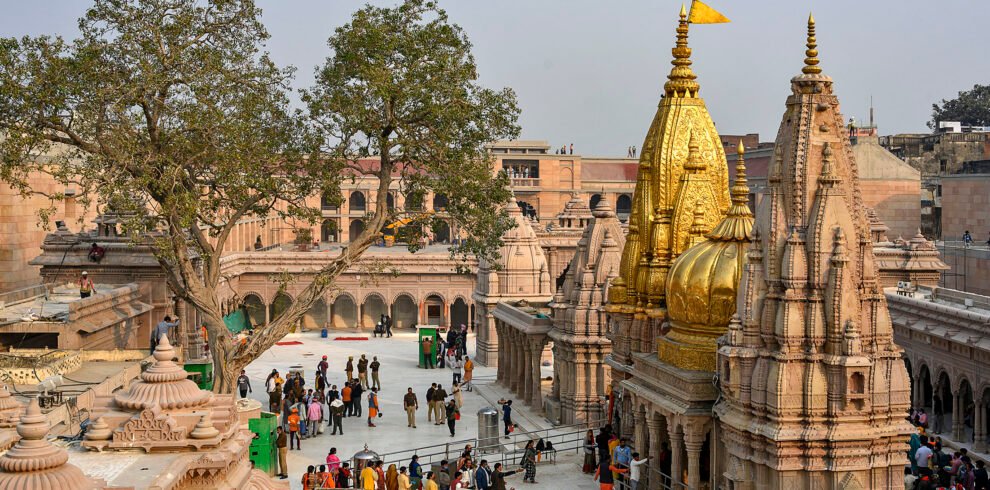
Experience divine bliss with our Kashi Ayodhya Tour Package from Bangalore 4N/5D, designed by Seven Sands Tourism for devotees seeking…
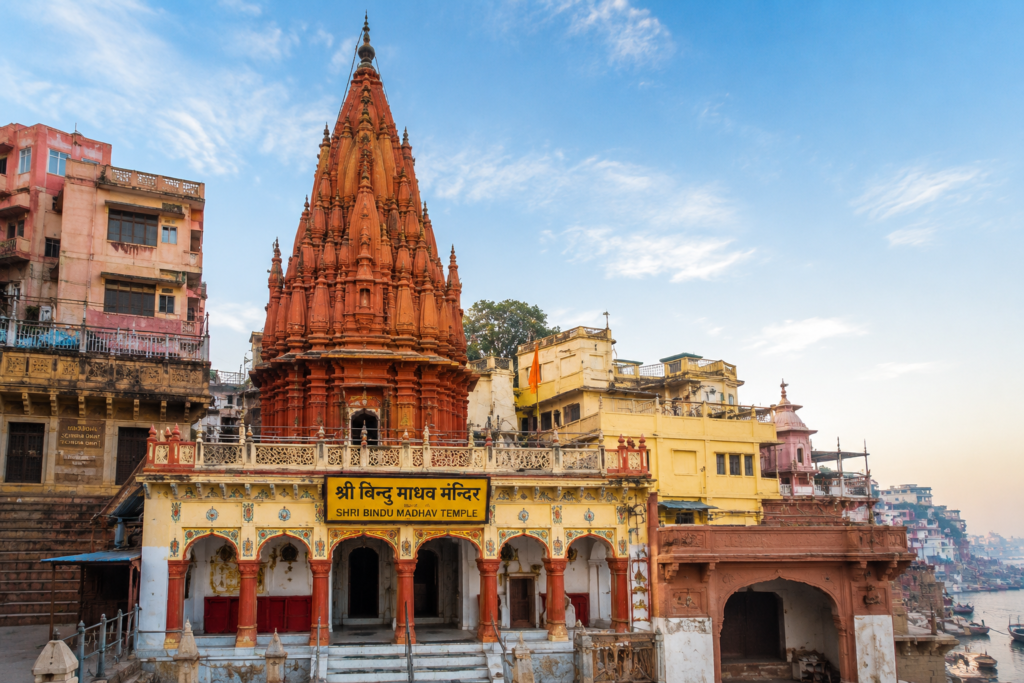
1. Bindu Madhav Temple Varanasi
Bindu Madhav Temple is one of the most ancient and sacred Vishnu temples in Varanasi. Located near the Panchganga Ghat on the banks of the holy Ganga river, this temple holds immense spiritual significance for Hindu devotees who visit Kashi every year. The temple is dedicated to Lord Vishnu and is believed to be over 1000 years old, making it one of the oldest Vishnu shrines in the entire city of Varanasi.
According to Hindu scriptures and ancient texts, a pilgrim’s visit to Varanasi is considered incomplete without seeking the blessings of Bindu Madhav. The temple name comes from two words — Bindu meaning a sacred drop of water and Madhav meaning Lord Vishnu. It is believed that Lord Vishnu himself resides at this spot and blesses every devotee who comes with a pure heart and sincere devotion.
The Bindu Madhav Temple Varanasi sits at the top of a steep flight of steps that lead down to the Panchganga Ghat — one of the most spiritually charged ghats in all of Kashi. From the temple premises, devotees get a breathtaking view of the Ganga below, especially during the early morning aarti when the river glows with the light of thousands of diyas.
The temple architecture reflects the classic North Indian Nagara style with a tall shikhara that rises dramatically above the surrounding buildings. The inner sanctum houses a beautiful black stone idol of Lord Vishnu in a reclining posture — an image that radiates peace and divine grace.
The best time to visit Bindu Madhav Temple is during Kartik Purnima, Dev Deepawali, and the auspicious month of Shravan when thousands of devotees from across India gather here to offer prayers. The atmosphere during these festivals is electric with devotion, music, and the fragrance of incense and flowers.
Seven Sands Tourism includes the Bindu Madhav Temple as a key stop in all Kashi tour packages from Bangalore. Our expert guides explain the history and significance of the temple in detail so every devotee truly understands the spiritual treasure they are experiencing. With comfortable transport, hotel stays near the ghats, and complete itinerary support, Seven Sands Tourism makes your Varanasi pilgrimage smooth, meaningful, and deeply fulfilling.
Quick Facts:
- Location: Panchganga Ghat, Varanasi
- Deity: Lord Vishnu
- Best Time to Visit: October to March
- Nearest Ghat: Panchganga Ghat
- Entry: Free for all devotees
2. Manikarnika Mandir Varanasi
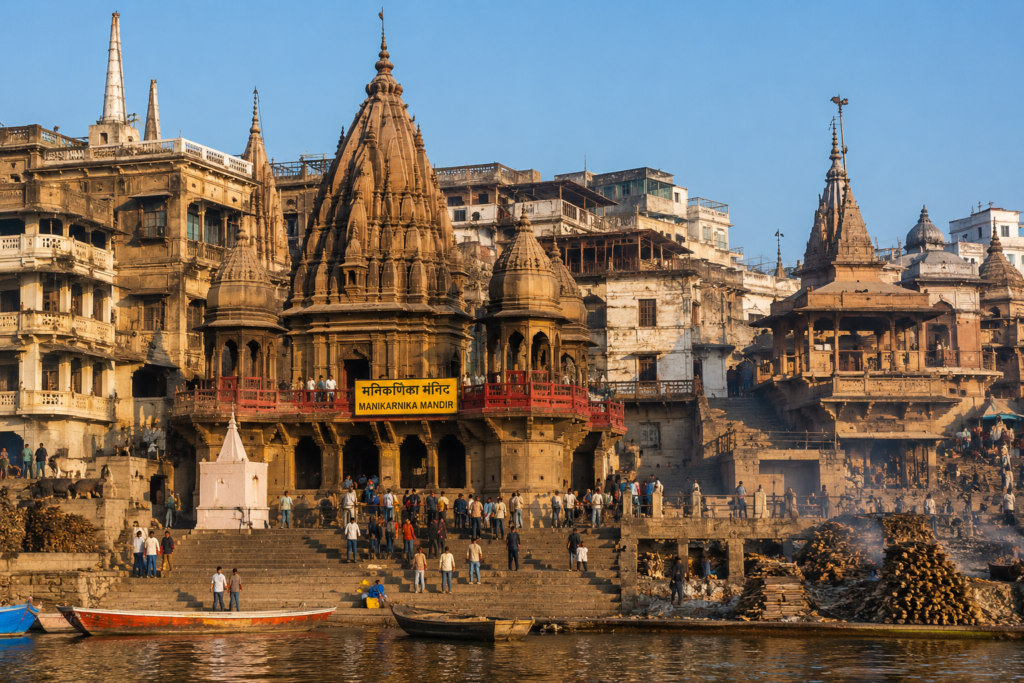
Manikarnika Mandir is one of the most sacred and spiritually powerful sites in all of Varanasi — a city that Hindus consider the gateway to moksha or liberation from the cycle of birth and death. Located at the famous Manikarnika Ghat, this mandir and the surrounding area hold a place of supreme importance in Hindu religious tradition and philosophy.
The name Manikarnika comes from two Sanskrit words — Mani meaning jewel and Karnika meaning earring. According to ancient Hindu mythology, the earring of Goddess Sati fell at this very spot when Lord Shiva carried her body across the universe in grief. This makes Manikarnika one of the most powerful Shakti Peethas in India — a place where divine energy is believed to be at its most concentrated and accessible.
Manikarnika Ghat is also known as the Mahashamshan — the great cremation ground — and has been burning continuously for thousands of years without interruption. Hindus believe that dying at Manikarnika or being cremated here guarantees moksha — freedom from all earthly suffering and the cycle of rebirth. Lord Shiva himself is believed to whisper the Taraka Mantra into the ear of every soul that leaves the body at this sacred place.
The Manikarnika Mandir that stands at this ghat is dedicated to the sacred Kund — a tank that is believed to have been dug by Lord Vishnu himself and filled with his divine sweat during his meditations. This kund is one of the most ancient sacred water bodies in Varanasi and is mentioned in several Puranas and ancient Hindu texts.
Visiting Manikarnika is a deeply moving and transformative experience. It confronts you with the reality of life and death in the most direct and honest way possible. The burning pyres, the grieving families, the chanting priests, and the flowing river all come together to create an atmosphere unlike anything else on Earth. Many travelers describe their visit to Manikarnika as the most profound experience of their entire lives.
Seven Sands Tourism guides all pilgrims visiting Varanasi through the sacred experience of Manikarnika with deep respect, sensitivity, and spiritual understanding. Our guides explain the religious significance, the mythology, and the correct rituals to follow so that every devotee honors this sacred space in the most appropriate and meaningful way.
Quick Facts:
- Location: Manikarnika Ghat, Varanasi
- Significance: Shakti Peetha and Mahashamshan
- Best Time to Visit: Early morning or evening
- Nearest Landmark: Dashashwamedh Ghat
- Entry: Open to all with respectful behavior
3. Nepali Temple Varanasi
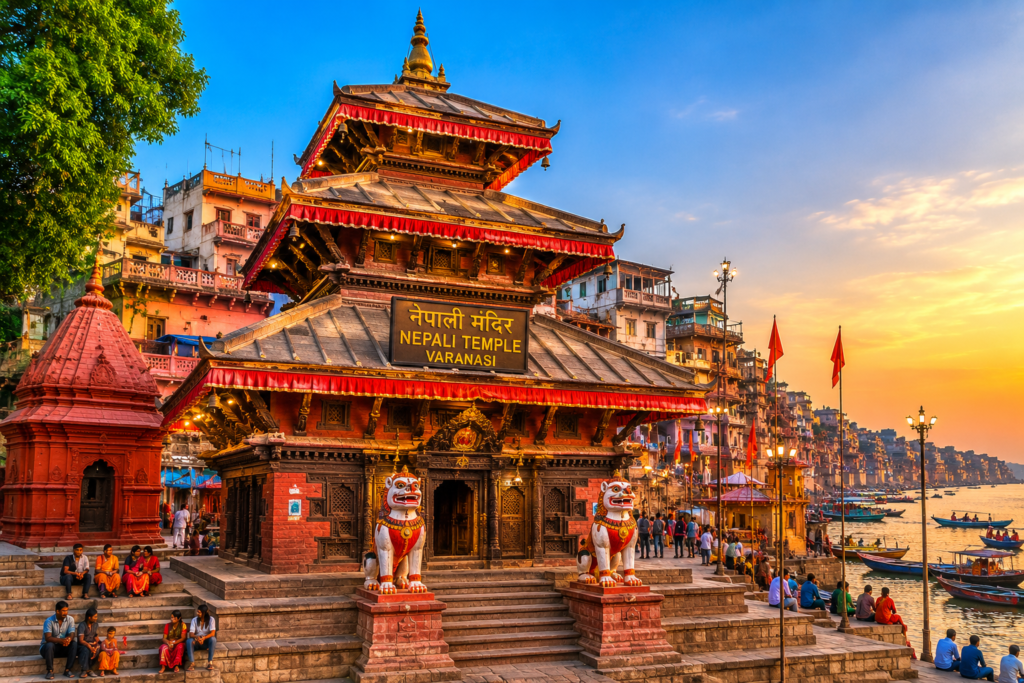
The Nepali Temple in Varanasi is one of the most architecturally stunning and visually unique temples in all of Kashi. Also known as the Lalita Gauri Temple or the Mini Khajuraho of Varanasi, this magnificent temple was built by the royal family of Nepal in the 19th century and stands as a beautiful symbol of the deep spiritual bond between India and Nepal.
Located near the Lalita Ghat on the banks of the Ganga, the Nepali Temple Varanasi is built entirely from red sandstone and wood in the classic Nepalese pagoda style of architecture — a style that is rarely seen outside the Kathmandu Valley. The intricate wooden carvings that decorate every surface of the temple are extraordinary in their detail and craftsmanship, depicting scenes from Hindu mythology, divine figures, and ornate geometric patterns.
The temple is dedicated to Lord Shiva and houses a beautiful Shiva lingam in its inner sanctum. Devotees who visit this temple experience a powerful sense of peace and divine presence that is heightened by the serene location on the riverbank and the sound of the flowing Ganga just steps away.
What makes the Nepali Temple Varanasi especially fascinating is its architectural contrast with the surrounding temples and ghats. In a city full of North Indian Nagara style temples, the Nepalese pagoda architecture of this temple stands out dramatically — making it a favorite destination for both pilgrims and photography enthusiasts who want to capture something truly different.
The erotic carvings on the outer walls of the Nepali Temple — similar to those found at Khajuraho — are believed to represent the concept of Kama as one of the four Purusharthas or goals of human life in Hindu philosophy. These carvings are not considered obscene in their cultural context but are instead interpreted as a celebration of life in all its aspects.
Seven Sands Tourism includes the Nepali Temple as part of the ghat walk experience in all Kashi pilgrimage packages from Bangalore. Our guides provide detailed cultural and historical context so that every traveler understands the beauty and significance of this unique temple in its full depth.
Quick Facts:
- Location: Lalita Ghat, Varanasi
- Deity: Lord Shiva
- Architecture: Nepalese Pagoda Style
- Built By: Royal Family of Nepal
- Best Time to Visit: Early morning during Ganga Aarti
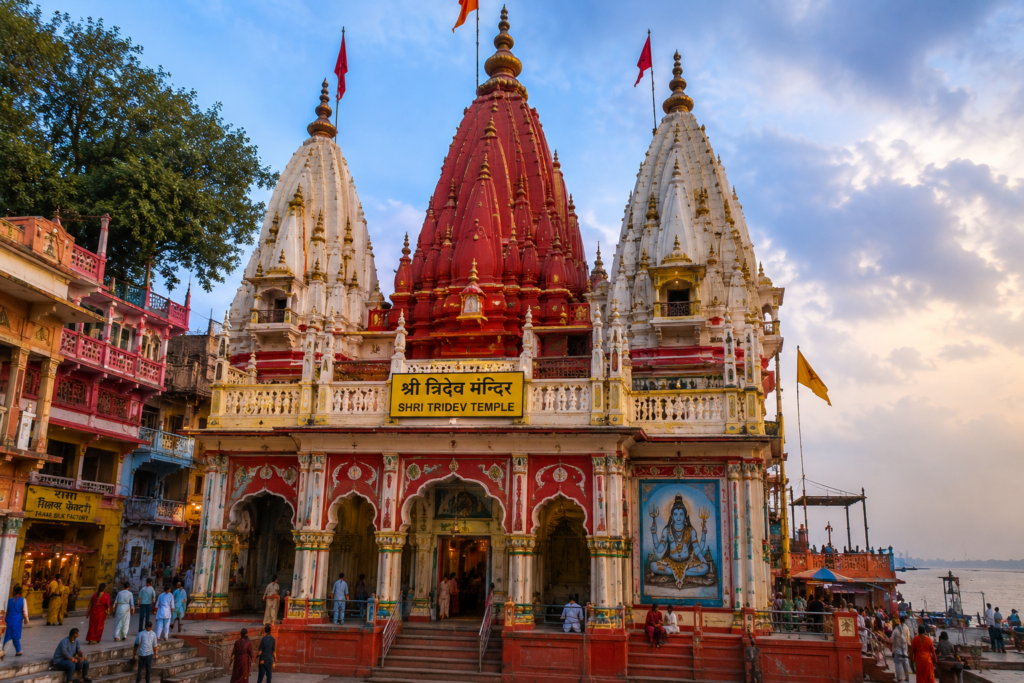
4. Tridev Temple Varanasi
The Tridev Temple in Varanasi is a unique and deeply significant shrine that is dedicated to the holy trinity of Hindu gods — Brahma the creator, Vishnu the preserver, and Mahesh or Shiva the destroyer. In most Hindu temples across India, you will find a single deity as the main object of worship. The Tridev Temple Varanasi is special because it brings together all three supreme gods of Hinduism under one sacred roof — making it one of the most complete and spiritually encompassing temples in all of Kashi.
The concept of Tridev or Trimurti is central to Hindu philosophy. It represents the three fundamental forces of the universe — creation, preservation, and destruction — which together maintain the cosmic balance of existence. Worshipping all three together at the Tridev Temple is believed to bring complete blessings covering every aspect of a devotee’s life — health, prosperity, wisdom, protection, and spiritual growth.
The Tridev Temple Varanasi is located in the heart of the old city — in the winding lanes of Kashi that have been walked by saints, scholars, and seekers for thousands of years. The temple is built in the traditional North Indian style and its inner sanctum features beautifully decorated idols of all three deities placed together in a harmonious arrangement that reflects the unity of all divine power.
Visiting the Tridev Temple during the early morning hours when the priests perform the daily aarti is a particularly special experience. The sound of bells, the fragrance of incense, the flickering flames of the aarti lamps, and the collective prayers of devotees create an atmosphere of intense spiritual energy that stays with you long after you leave.
The temple is especially significant during Maha Shivratri when thousands of devotees gather to worship Lord Shiva as part of the Trimurti, and during Brahmotsavam festivals when all three deities are celebrated together with great pomp and devotion.
Seven Sands Tourism ensures that pilgrims visiting Varanasi include the Tridev Temple in their darshan itinerary. Our Kashi tour packages from Bangalore cover all the major and lesser-known temples of Varanasi with expert guidance and comfortable travel arrangements.
Quick Facts:
- Location: Old City, Varanasi
- Deity: Brahma, Vishnu, and Mahesh (Trimurti)
- Significance: Only temple with all three supreme Hindu deities together
- Best Time to Visit: Maha Shivratri and Brahmotsavam
- Entry: Free for all devotees
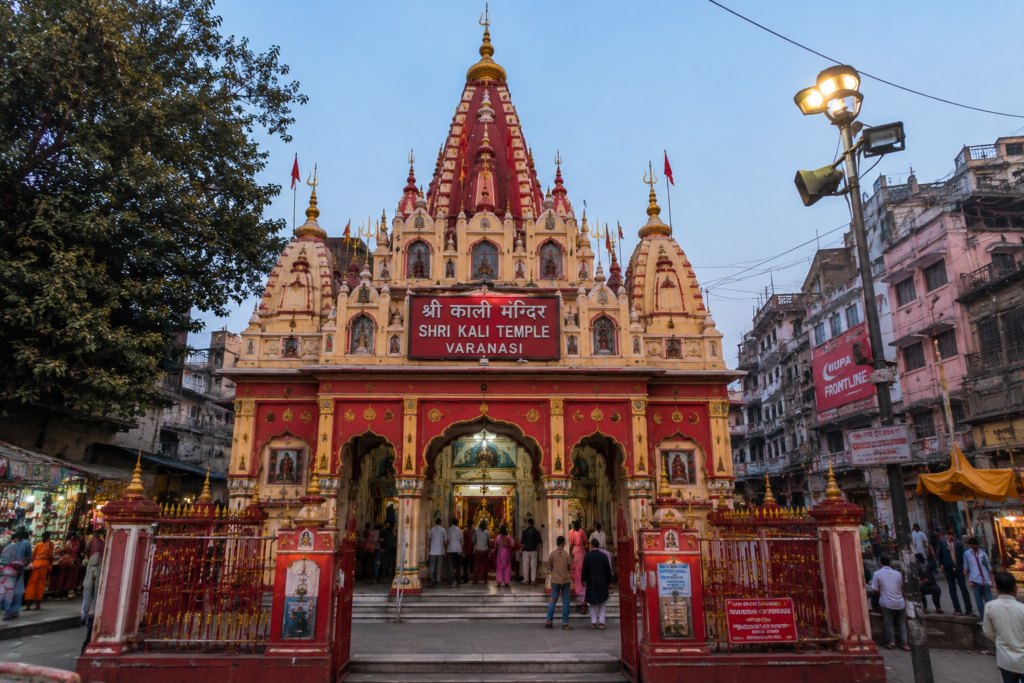
5. Kali Temple Varanasi
The Kali Temple in Varanasi is one of the most powerful and spiritually intense sacred sites in all of Kashi. Dedicated to Goddess Kali — the fierce and transformative form of the divine mother — this temple draws tens of thousands of devotees every year who come seeking the goddess’s protection, strength, and blessings.
Goddess Kali is one of the most important deities in the Hindu tradition. She is the goddess of time, change, power, and liberation. Her fierce form — with dark skin, a garland of skulls, and a sword in her hand — is not meant to frighten but to protect. Kali destroys evil, removes obstacles, and liberates her devotees from fear and ignorance. In Varanasi — the city of Lord Shiva — the worship of Kali takes on an even deeper dimension because Shiva and Kali are considered complementary divine forces.
The Kali Temple Varanasi is considered one of the most potent Shakti shrines in the entire Kashi Kshetra. The energy inside the temple during aarti and special puja ceremonies is described by devotees as overwhelming in the most beautiful way — a feeling of being completely surrounded and protected by divine feminine power.
The temple is particularly significant during the festival of Kali Puja which falls on the new moon night of the Hindu month of Kartik — the same night as Diwali in many parts of India. During this night, the temple comes alive with thousands of lamps, elaborate decorations, special tantric rituals, and an atmosphere of raw spiritual power that is unlike anything else in Varanasi.
Devotees who visit the Kali Temple in Varanasi often combine it with visits to other Shakti shrines in the city — creating a complete Devi darshan experience that covers the divine feminine in all her forms. Seven Sands Tourism can design a complete Shakti pilgrimage itinerary for devotees who want to experience the full power of the goddess in Kashi.
Quick Facts:
- Location: Varanasi old city area
- Deity: Goddess Kali
- Most Sacred Festival: Kali Puja (Kartik Amavasya)
- Best Time to Visit: Evening aarti and Navratri
- Entry: Free for all devotees
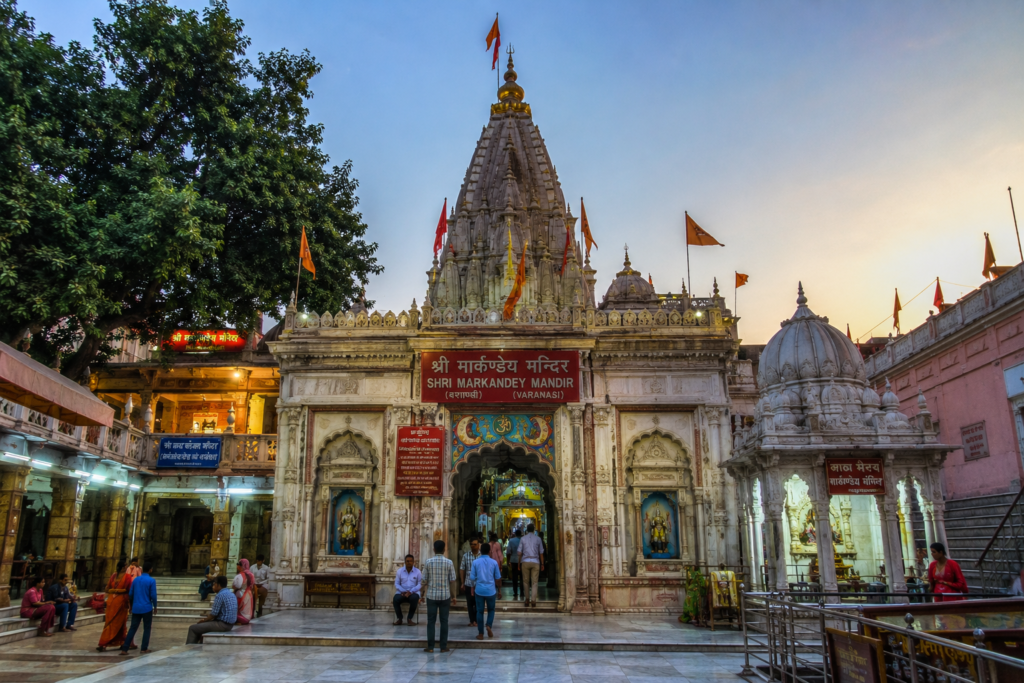
6. Markandey Mandir Varanasi
Markandey Mandir in Varanasi is one of the most ancient and mythologically rich temples in all of Kashi — a city already overflowing with divine stories and sacred histories. This temple is dedicated to the great sage Markandey who is celebrated in Hindu tradition as the devotee who conquered death itself through his unwavering devotion to Lord Shiva.
The story of Sage Markandey is one of the most beloved tales in Hindu mythology. According to the Puranas, Markandey was destined to die young — but his absolute devotion to Lord Shiva was so powerful that when Yama the god of death came to claim him, Lord Shiva intervened and kicked Yama away, granting Markandey immortality. This is why Markandey is also known as Chiranjeevi — one of the immortal beings in Hindu tradition.
The Markandey Mandir Varanasi is believed to be located at or near the very spot where this divine event took place — making it an extraordinarily sacred pilgrimage destination for devotees who seek Lord Shiva’s protection from untimely death and who pray for long and healthy lives for their loved ones.
The temple is especially popular among elderly pilgrims and families who come to pray for the health and longevity of senior members of their family. The spiritual atmosphere of the temple is peaceful and deeply reassuring — a place where devotees feel that Lord Shiva’s protective grace is very close and very real.
During the auspicious month of Shravan, the Markandey Mandir Varanasi sees a significant increase in pilgrims who walk the Pancha Koshi Yatra — the sacred circumambulation of Varanasi that covers all the major temples and ghats of Kashi in a single continuous journey of devotion.
Seven Sands Tourism includes the Markandey Mandir in specially designed senior citizen pilgrimage packages from Bangalore where the significance of this temple’s connection to longevity and divine protection resonates deeply with elderly devotees and their families.
Quick Facts:
- Location: Varanasi old city
- Deity: Sage Markandey and Lord Shiva
- Significance: Temple at the spot of Markandey’s divine salvation
- Best Time to Visit: Shravan month and Maha Shivratri
- Entry: Free for all pilgrims
7. Manas Mandir Banaras
Manas Mandir in Banaras is a completely unique and extraordinarily beautiful temple that stands apart from every other temple in Varanasi — not because of its deity but because of what it contains on its walls. The Manas Mandir Banaras is entirely dedicated to the Ramcharitmanas — the beloved devotional epic written by the great saint-poet Tulsidas in the 16th century — and its walls are inscribed from floor to ceiling with verses from this sacred text.
Walking into the Manas Mandir Banaras feels like walking into the living pages of the Ramcharitmanas itself. Every wall, every pillar, and every surface of the temple interior is covered with beautifully inscribed verses in the Awadhi language — the language in which Tulsidas wrote his masterpiece. For devotees of Lord Ram and admirers of Indian devotional literature, this temple is an experience of pure divine joy.
The temple is dedicated to Lord Ram and contains beautiful marble idols of Ram, Sita, Lakshman, and Hanuman in the main sanctum. The idols are exquisitely crafted and adorned with silk garments and gold ornaments that are changed according to the season and occasion — reflecting the loving care and devotion of the temple priests and trustees.
Manas Mandir Banaras was established in honor of the great saint Tulsidas who spent much of his life in Varanasi and who composed the Ramcharitmanas here — completing one of the greatest works of devotional literature in any language anywhere in the world. The temple therefore carries the combined spiritual energy of Lord Ram’s story and Tulsidas’s extraordinary devotion — a combination that creates an atmosphere of profound peace and inspiration.
The temple is particularly vibrant during Ram Navami — the birthday of Lord Ram — and during the Ramleela performances that Varanasi is famous for during the Navratri season. During these times, the entire temple and surrounding area fill with music, recitation of the Ramcharitmanas, and the joyful celebration of Ram’s divine story.
Seven Sands Tourism includes the Manas Mandir as a highlight of all Kashi pilgrimage packages from Bangalore — especially for devotees who have a deep love for the Ramcharitmanas and the teachings of saint Tulsidas.
Quick Facts:
- Location: Banaras old city
- Deity: Lord Ram, Sita, Lakshman, and Hanuman
- Unique Feature: Walls inscribed with Ramcharitmanas verses
- Best Time to Visit: Ram Navami and Navratri season
- Entry: Free for all devotees
8. Sarv Ved Mandir Varanasi
Sarv Ved Mandir in Varanasi is one of the most remarkable and intellectually extraordinary temples in all of India — a sacred space that is unlike anything else you will find in the entire country. The Sarv Ved Mandir Varanasi is dedicated not to a single deity but to all four Vedas — the Rigveda, the Samaveda, the Yajurveda, and the Atharvaveda — the most ancient and sacred scriptures of Hindu civilization.
What makes the Sarv Ved Mandir Varanasi truly extraordinary is the fact that the entire text of all four Vedas — hundreds of thousands of Sanskrit verses that represent thousands of years of human spiritual knowledge — is inscribed on the walls, ceilings, pillars, and surfaces of the temple. It took decades of painstaking work by Sanskrit scholars and skilled craftsmen to complete this monumental task of inscription.
The result is a temple that is simultaneously a sacred shrine, a library, a university, and a living monument to the power of the Vedic tradition. Walking through the Sarv Ved Mandir is walking through the entire recorded history of Hindu spiritual knowledge — an experience that is humbling, awe-inspiring, and deeply moving for anyone who understands the significance of what the Vedas represent.
The temple was established with the vision of preserving Vedic knowledge for all future generations and making it physically accessible to every devotee — regardless of whether they can read Sanskrit or not. The presence of the Vedic text in sacred physical form is itself considered powerfully auspicious and protective.
Scholars, researchers, spiritual seekers, and curious travelers from across India and the world visit the Sarv Ved Mandir Varanasi to experience this extraordinary combination of devotion and scholarship. It is a place that appeals to the mind as much as the heart — and in Varanasi, a city that has always been a center of learning and spirituality together, this temple feels perfectly at home.
Seven Sands Tourism includes the Sarv Ved Mandir as a special highlight for intellectually curious pilgrims and devotees with a deep interest in Vedic tradition, Sanskrit scholarship, and the ancient roots of Hindu spirituality.
Quick Facts:
- Location: Varanasi
- Dedicated To: All four Vedas — Rigveda, Samaveda, Yajurveda, Atharvaveda
- Unique Feature: Complete text of all four Vedas inscribed on temple walls
- Best Time to Visit: Year round
- Entry: Open to all visitors and pilgrims
9. Somnath Temple Varanasi
The Somnath Temple in Varanasi is a sacred shrine dedicated to Lord Shiva in his form as Somnath — the Lord of the Moon. While the most famous Somnath Temple in India is located in Gujarat and is counted among the twelve Jyotirlingas, the Somnath Temple in Varanasi carries its own deep spiritual significance as a Shiva shrine within the holy city of Kashi — where Lord Shiva himself is said to reside eternally.
In Hindu tradition, Somnath means the Lord who is the protector and nourisher of the moon — Som meaning moon and Nath meaning lord or protector. The moon is associated with the mind, emotions, healing, and the passage of time in Hindu and Vedic astrology. Worshipping Somnath is believed to bring peace of mind, emotional healing, and relief from the malefic effects of a weakened moon in one’s astrological chart.
The Somnath Temple Varanasi is visited by thousands of devotees throughout the year, but sees particularly high footfall on Mondays — the day of the week sacred to Lord Shiva — and during the auspicious month of Shravan when Shiva devotees from across India make their pilgrimage to Varanasi. Pradosh Vrat — observed on the 13th day of each lunar fortnight — is also a specially significant time to visit this temple.
The temple holds a beautiful Shiva lingam in its inner sanctum that is adorned with fresh flowers, bel leaves, and holy water from the Ganga every morning during the abhishek ritual. The energy of the early morning abhishek at the Somnath Temple in Varanasi is deeply calming and spiritually charged — many devotees describe it as one of the most peaceful moments of their entire Kashi pilgrimage.
Seven Sands Tourism ensures that devotees visiting Varanasi on Monday or during Shravan month have the Somnath Temple included in their darshan schedule — along with all the major Shiva shrines of Kashi for a complete and deeply fulfilling Shiva pilgrimage experience from Bangalore.
Quick Facts:
- Location: Varanasi
- Deity: Lord Shiva as Somnath
- Most Sacred Day: Monday and Shravan month
- Best Time to Visit: Early morning abhishek
- Entry: Free for all Shiva devotees
10. Man Mahal Varanasi
Man Mahal in Varanasi is one of the most historically fascinating and architecturally significant structures along the famous ghats of the Ganga — a magnificent palace that was built by the great Rajput ruler Raja Man Singh of Amber in the late 16th century during the reign of the Mughal Emperor Akbar.
Located prominently between Someshwar Ghat and Tripurabhairavi Ghat, the Man Mahal Varanasi rises impressively from the riverbank with its distinctive Rajput architectural features — ornate balconies, arched windows, decorative towers, and the characteristic red and yellow ochre facade that speaks of royal Rajputana craftsmanship and aesthetic sensibility.
The Man Mahal was originally constructed as a royal rest house where Raja Man Singh and other Rajput nobility could stay when they visited Varanasi for pilgrimage. Over the centuries it has served multiple purposes — as a royal residence, as a dharamshala for pilgrims, and as an observatory. Today a part of the Man Mahal houses the Maharaja of Jaipur’s trust and is also home to an ancient astronomical observatory equipped with instruments used to measure time, track celestial movements, and study the positions of stars and planets.
What makes the Man Mahal Varanasi especially interesting for heritage travelers is this combination of royal architecture, pilgrimage history, and scientific inquiry — all existing together in one magnificent riverside structure. It reflects the multi-dimensional nature of Varanasi itself, a city that has always been a center of faith, philosophy, art, and knowledge simultaneously.
The view of the Ganga and the surrounding ghats from the upper terraces of Man Mahal is absolutely spectacular — especially during the evening when the Ganga Aarti fills the river with light and the air with sacred music and the fragrance of flowers and incense.
Seven Sands Tourism includes the Man Mahal Varanasi as part of the heritage ghat walk experience in all Kashi tour packages from Bangalore. Whether you are a pilgrim seeking spiritual experiences, a history enthusiast exploring Rajput heritage, or a photography lover looking for the perfect river sunset shot — Man Mahal delivers something extraordinary for every type of traveler.
Quick Facts:
- Location: Between Someshwar and Tripurabhairavi Ghat, Varanasi
- Built By: Raja Man Singh of Amber
- Period: Late 16th century
- Unique Feature: Royal palace with ancient astronomical observatory
- Best Time to Visit: Evening during Ganga Aarti
- Entry: Heritage site open for visitors
Table of Contents
Dress code of kashi vishwanath temple dress code,
Frequently Asked Questions (FAQs)
Which are the most sacred temples to visit in Varanasi?
The most sacred temples to visit in Varanasi include Bindu Madhav Temple, Manikarnika Mandir, Nepali Temple, Tridev Temple, Kali Temple, Markandey Mandir, Manas Mandir, Sarv Ved Mandir, Somnath Temple, and Man Mahal. Each temple carries deep spiritual significance and offers a unique divine experience for every pilgrim visiting Kashi.
What is the best time to visit the sacred temples of Varanasi?
The best time to visit the sacred temples of Varanasi is between October and March when the weather is cool and pleasant. The most spiritually powerful times to visit are during Maha Shivratri, Shravan month, Dev Deepawali, Kartik Purnima, and Ram Navami when the entire city of Kashi comes alive with devotion, festivals, and divine energy.
Is Manikarnika Mandir open for all visitors in Varanasi?
Yes, Manikarnika Mandir in Varanasi is open for all visitors regardless of religion or background. However, visitors are expected to maintain complete silence, dress respectfully, and behave with deep sensitivity as Manikarnika Ghat is an active cremation ground and one of the holiest Shakti Peethas in India. Photography is strictly not permitted at the ghat area.
How many days are enough to visit all temples in Varanasi?
A minimum of 3 to 4 days is ideal to comfortably visit all the major sacred temples of Varanasi including Bindu Madhav Temple, Manikarnika Mandir, Nepali Temple, Kali Temple, Manas Mandir, Sarv Ved Mandir, and others. Seven Sands Tourism offers a perfectly planned 4 night 5 day Kashi tour package from Bangalore covering all major temples with guided darshan support.
What is special about the Nepali Temple in Varanasi?
The Nepali Temple in Varanasi is special because it is the only temple in Kashi built entirely in the Nepalese pagoda architectural style using red sandstone and intricately carved wood. Built by the Royal Family of Nepal in the 19th century, it is dedicated to Lord Shiva and is located at Lalita Ghat offering a stunning view of the Ganga river. It is often called the Mini Khajuraho of Varanasi.
Can senior citizens comfortably visit the temples of Varanasi?
Yes, senior citizens can comfortably visit the temples of Varanasi with proper planning and the right travel support. Seven Sands Tourism offers specially designed senior citizen friendly Kashi pilgrimage packages from Bangalore with slow paced itineraries, wheelchair accessible transport, comfortable hotels near the ghats, dedicated tour escorts, and 24/7 medical assistance support throughout the journey.
What is the significance of Sarv Ved Mandir in Varanasi?
Sarv Ved Mandir in Varanasi is one of the most unique temples in India because the complete text of all four Vedas — Rigveda, Samaveda, Yajurveda, and Atharvaveda — is inscribed on its walls, pillars, and ceilings. It is the only temple in India dedicated entirely to all four Vedas together making it an extraordinary combination of spiritual devotion and ancient Vedic scholarship preserved in sacred physical form.
How to plan a Kashi temple tour from Bangalore with Seven Sands Tourism?
Planning a Kashi temple tour from Bangalore with Seven Sands Tourism is very simple. You can call us directly at +91 7022 84866 or visit our website at sevensandstourism.com to choose from our ready made Kashi tour packages or request a fully customized itinerary. We handle everything including flights or trains, hotel bookings near the ghats, temple darshan schedules, expert guides, and 24/7 support throughout your sacred journey.